“Chocolate, avocados, onions, and moldy foods are some of the most poisonous items you can leave out for squirrels. Even small amounts of these everyday ingredients can cause serious health issues—or be fatal—for these sensitive rodents.” Squirrels may look harmless scampering across your fence or chasing each other up a…“Chocolate, avocados, onions, and moldy foods are some of the most poisonous items you can leave out for squirrels. Even small amounts of these everyday ingredients can cause serious health issues—or be fatal—for these sensitive rodents.” Squirrels may look harmless scampering across your fence or chasing each other up a tree, but when they show up in your attic or tear through your garden, that charm disappears fast. In leafy neighborhoods where parks are close by and backyard bird feeders are everywhere, it’s no surprise that squirrels are regular visitors—and sometimes uninvited tenants. While many people enjoy watching them or even tossing out food, what you leave behind can actually be dangerous to squirrels—and a bigger headache for you without proper squirrel control . This article isn’t about harming wildlife. It’s about knowing what food is poisonous to squirrels so you don’t accidentally invite them in or make them sick. If you’ve been leaving out scraps, filling feeders, or composting without thinking twice, there’s a good chance you’re creating a squirrel buffet without even realizing it. Let’s break down what to avoid, what to secure, and how to protect both your home and the squirrels from a bad encounter. What Is The Most Dangerous Foods for Squirrels? Chocolate and Caffeinated Products Chocolate is one of the most toxic substances you can accidentally leave out for squirrels or any rodent. It contains theobromine—a stimulant that these small animals can’t metabolize effectively. Just a small amount from a brownie, chocolate almond bar, or sugar-filled candy can trigger tremors, elevated heart rate, or seizures in squirrels. Since they have such fast metabolisms and tiny bodies, the toxic effects hit hard and fast, often with serious consequences. Caffeinated foods and drinks are equally dangerous. Coffee grounds , soda spills, or chocolate-covered espresso beans tossed into a compost pile can be life-threatening if a squirrel gets into them. Where outdoor parties and backyard BBQs are common, it’s easy for sugary or caffeine-rich snacks to end up where rodents roam. To keep squirrels safe and your property clear of unwelcome visitors, make it a habit to clean up thoroughly and store all sweet or stimulant-laced foods securely. Avocados Avocados contain persin, a fungicidal toxin found in the fruit’s skin, pit, and even its leaves. While persin might not harm humans, it can be toxic to many animals, including squirrels. The risk isn’t just in eating an avocado—squirrels that nibble on a discarded peel, chewed seed, or exposed pit can experience digestive issues or worse. What makes this even more concerning is how easily avocado waste can be overlooked, especially in compost bins. If you’re growing avocado trees or preparing guacamole from scratch, this is something to stay mindful of. As urban farming and composting become more popular, the risk of accidentally exposing squirrels to this toxic fruit increases. Make sure avocado scraps are properly sealed or discarded, and if you have a tree, regularly clear fallen fruit from the yard. It’s better to be safe than to unknowingly poison a local animal. Onions, Garlic, and Spicy Foods While these aromatic kitchen staples may keep your chili full of flavor, they spell serious trouble for squirrels. Onions and garlic contain compounds that can damage red blood cells, leading to anemia and other health complications. The danger extends to cooked dishes, too. If a squirrel gets into leftover food seasoned with garlic or onions, even in small amounts, it can suffer lasting effects. In worst cases, repeated exposure can be fatal over time. Spicy foods also pack a punch that squirrels can’t handle. Hot sauce remnants, chili powder, or discarded tacos can cause severe digestive distress. Where spicy dishes are a staple, food waste often ends up in outdoor bins or compost piles. Make sure spicy scraps are stored in critter-proof containers, and avoid tossing seasoned leftovers near your patio or yard. The goal isn’t just to avoid harming squirrels—it’s to stop inviting them altogether. Alcohol and Fermented Fruit Alcohol might seem like an unlikely threat to wildlife, but squirrels are highly sensitive to it. Whether it’s beer spills from a tailgate, wine left out on the porch, or sugary cocktails left on patio tables, these drinks can lead to disorientation, slowed reaction time, and eventually liver failure in squirrels. Their small bodies can’t handle even trace amounts, and it doesn’t take much to put them in serious danger. Another sneaky culprit? Overripe or fermenting fruit, especially in backyards with peach, fig, or persimmon trees. As the fruit falls and begins to break down, it can release natural alcohols that attract squirrels and get them intoxicated. They may stagger, fall from trees, or become easy prey for predators. Regularly clean up fruit from the ground and keep alcoholic beverages secure during outdoor events. Salty Snacks and Chips Salt is another ingredient that can easily disrupt a squirrel’s internal balance. While humans can handle a salty snack during a football game or backyard hangout, squirrels don’t process salt well. Even a few bites of junk food like chips, pretzels, or salted walnut snacks can dehydrate them and overwork their kidneys. These types of treats also contain added sugar and artificial ingredients that offer zero nutritional value for squirrels—making them both harmful and useless from a dietary perspective. Many of these items—especially sugary breakfast cereals or processed snack mixes—are casually dropped or tossed outside without much thought. But to a hungry squirrel, that forgotten bowl of cereal or spilled trail mix is a full meal. Where outdoor events, food trucks, and weekend cookouts are part of the culture, squirrels quickly learn where the good stuff is. Cleaning up sugary crumbs and sealing snack waste tightly are easy steps that help discourage squirrels from turning your yard into their favorite buffet line. Surprising “Healthy” Foods That Still Poisonous To Squirrels Not all squirrel-dangerous foods are obviously harmful. Some look totally natural or even nutritious—but for squirrels, they can cause more harm than good. These foods often show up in gardens, bird feeders, compost piles, or well-meaning attempts to “feed the wildlife.” Here’s what to watch for. Raw Corn (Especially Moldy Corn) Corn might seem harmless—it’s a common ingredient in bird seed, livestock feed, and even human snacks. But when corn starts to mold, it can develop aflatoxins, which are highly toxic to squirrels and many other animals. Aflatoxins are produced by certain types of fungi and can affect liver function, immune systems, and even lead to cancer in wildlife. A squirrel doesn’t have to eat much moldy corn for it to cause serious internal damage. The risk goes up during warm, humid stretches—especially in summer—when moisture speeds up mold growth. Corn that’s left outside for too long, stored improperly in feeders, or tossed into compost piles can quickly become a hidden hazard. If you’re putting out corn in a feeder, store it in a dry place, change it frequently, and never offer anything that smells off or looks discolored. It’s not just about nutrition—it’s about safety. Bread and Processed Carbs Bread might feel like a safe, throwaway snack for critters—but it’s actually a poor and potentially harmful food choice for squirrels. Bread, crackers, and other refined carbs offer little to no nutrition, and they can expand in a squirrel’s stomach, leading to bloating or discomfort. In some cases, processed bread products contain preservatives and additives that are hard for squirrels to digest, weakening their system over time. Squirrels that eat too much bread often end up malnourished despite feeling full. This is especially common in neighborhoods where residents leave out food “just to be nice.” Unfortunately, the kindness backfires. Instead of helping, you may be attracting squirrels that grow dependent on an unhealthy food source—and more likely to take up permanent residence in your attic. If you want to be squirrel-friendly, stick to natural deterrents and avoid the bread basket. Peanuts (Especially Salted or Moldy) Peanuts are a bit of a wildcard. While they’re often seen in squirrel food blends or used to lure wildlife for photos, they aren’t actually nuts—they’re legumes. And when they’re salted, roasted, or worse, moldy, they become a serious risk. Moldy peanuts, like corn, can carry aflatoxins that attack a squirrel’s liver and immune system. Salted peanuts, on the other hand, can cause dehydration and kidney stress. This matters because many people use peanuts to feed birds or squirrels without realizing the risks. In fact, some birdseed mixes from big-box stores still include them. If you’re trying to keep squirrels away from your yard—or avoid poisoning them by accident—skip the peanuts. And if you must use them, go for raw, unsalted, and fresh, and use a squirrel-proof bird feeder so your effort to help one species doesn’t endanger another. Foods That Attract Squirrels (But Shouldn’t) Some foods might not be poisonous, but they’re basically neon signs saying “Free Snacks Here!” for squirrels. These attractants can lead to more frequent visits, nesting, and eventual infestations. If you’re trying to squirrel-proof your yard or keep them from invading your home, these are the items to manage carefully. Bird Seed and Pet Food Bird feeders are one of the top culprits for squirrel problems. Many blends contain sunflower seeds, millet, corn, and peanuts—aka squirrel candy. Once they find a reliable food source, squirrels will return again and again, sometimes destroying the feeder in the process. The same goes for pet food left outside. Dry kibble and wet food alike are high-protein, calorie-dense meals that squirrels will happily devour. Where backyard birdwatching is popular and outdoor pet bowls are commo
Featured Resources
ArticleWildlife Damage Management Technical Series
United States Department of Agriculture: Animal and Plant Health Inspection Service Wildlife Damage Management Technical Series Bryan M. Kluever , United States Department of Agriculture, Animal and Plant Health Inspection Service, Wildlife Services National Wildlife Research Center, Gainesville, Florida Follow Lee A. Humberg , United States Department of Agriculture, Animal…United States Department of Agriculture: Animal and Plant Health Inspection Service Wildlife Damage Management Technical Series Bryan M. Kluever , United States Department of Agriculture, Animal and Plant Health Inspection Service, Wildlife Services National Wildlife Research Center, Gainesville, Florida Follow Lee A. Humberg , United States Department of Agriculture, Animal and Plant Health Inspection Service, Wildlife Services, West Lafayette, Indiana Follow Scott C. Barras , United States Department of Agriculture, Animal and Plant Health Inspection Service, Wildlife Services, Moseley, Virginia Follow Date of this Version 2-2026 Document Type Article Citation Wildlife Damage Management Technical Series, February 2026 United States Department of Agriculture, Animal and Plant Health Inspection Service, Wildlife Services, National Wildlife Research Center, Fort Collins, Colorado Abstract Fact sheet about vultures including information about human--wildlife conflicts, the vulture roost, affects on livestock, structures, human health and safety, identification of damage, management methods, legal considerations, and economics. Also included is an overview of the species. DOWNLOADS Since February 27, 2026 COinS
A modelling effort using POP-II software was presented to show the effects of altering the harvest structure of the reduction. The relatively high harvests of the last two years may result in maintaining the current Park population levels. A variety of scenarios increasing the number and proportion of cows harvested…A modelling effort using POP-II software was presented to show the effects of altering the harvest structure of the reduction. The relatively high harvests of the last two years may result in maintaining the current Park population levels. A variety of scenarios increasing the number and proportion of cows harvested show the greater effects cow harvests have on reducing the population relative to bull harvests.
United States Department of Agriculture: Animal and Plant Health Inspection Service Wildlife Damage Management Technical Series Date of this Version 12-2018 Document Type Article Citation Vantassel, S.M. and B.K. Osthus. 2018. Safety. Wildlife Damage Management Technical Series. USDA, APHIS, WS National Wildlife Research Center. Fort Collins, Colorado. 19p. Abstract Wildlife…United States Department of Agriculture: Animal and Plant Health Inspection Service Wildlife Damage Management Technical Series Date of this Version 12-2018 Document Type Article Citation Vantassel, S.M. and B.K. Osthus. 2018. Safety. Wildlife Damage Management Technical Series. USDA, APHIS, WS National Wildlife Research Center. Fort Collins, Colorado. 19p. Abstract Wildlife damage management (WDM) is an exciting field with many opportunities to provide solutions to the complex issues involved in human-wildlife interactions. In addition, WDM wildlife control operators (WCO) face a variety of threats to their physical well-being. Injuries can result from misused (Figure 1), faulty, or poorly maintained equipment, inexperience, mishandled wildlife, harsh weather, and dangerous situations, such as electrical lines. The goals of this publication are to: * Develop an awareness of safety issues and adopt a mindset of “Safety First”, * Review the major safety threats that WCOs face, * Provide basic information for WCOs to protect themselves, and * List resources for further information and training. Although no statistics are available for the WDM industry in particular, the authors are aware of several instances where WCOs have lost their lives or suffered serious injuries while performing WDM. While accidents do happen, most are preventable and occur due to hurried behavior, neglect of procedures, or lack of attention to the task at hand. The United States, Canada, and Mexico have agencies tasked with setting and enforcing standards to assure safe and healthful conditions for workers. The U.S. agency is the Occupational Safety and Health Administration (OSHA). In Canada, it is the Labour Program, and in Mexico, the Ministry of Labor and Social Welfare governs workplace requirements. Readers are encouraged to keep abreast of government safety regulations not only to follow the law, but also to maintain a safe working environment. Safety is an extremely broad and complex topic. The number and diversity of situations that pose safety risks to WCOs are numerous. This publication focuses specifically on safety risks to the WCOs’ physical wellbeing, such as injuries. Safety concerns pertaining to organizational design, worker supervision, disease, environmental or social catastrophes, or pesticides are beyond its scope. Work in WDM poses many safety risks to those involved. Awareness, planning, and deliberate action can eliminate or reduce many threats. As the industry continues to develop, WCOs must keep up with new threats and safety practices to maintain their well-being. Following safe work practices helps to ensure WCOs remain on-the-job and injury free. DOWNLOADS Since December 20, 2018 COinS
United States Department of Agriculture: Animal and Plant Health Inspection Service United States Department of Agriculture Wildlife Services: Staff Publications Document Type Article Date of this Version 2024 Citation Proceedings, 31st Vertebrate Pest Conference, paper 12 Published August 30, 2024 Editors: Rober M. Timm and D. M. Woods Abstract The…United States Department of Agriculture: Animal and Plant Health Inspection Service United States Department of Agriculture Wildlife Services: Staff Publications Document Type Article Date of this Version 2024 Citation Proceedings, 31st Vertebrate Pest Conference, paper 12 Published August 30, 2024 Editors: Rober M. Timm and D. M. Woods Abstract The United States Agriculture Improvement Act of 2018 (the 2018 Farm Bill) established the Feral Swine Eradication and Control Pilot Program. The program funded US$75M for 5 years, split evenly between the Natural Resources Conservation Service (NRCS) and the Animal and Plant Health Inspection Service (APHIS), both programs within the United States Department of Agriculture. The agencies solicited joint programs from states with high densities of feral swine in two phases. In Texas, NRCS and APHIS submitted three multi-county project areas along watersheds for Phase I funding and one eradication effort along with two crop protection projects in Phase II. The eradication project was adjacent to a Phase I project area and after extensive surveillance, it was determined to be successful, the first such project in Texas. All the remaining projects were designed with a direct management effort, a self-help effort through trap loans and a damage assessment process. Landowner in-kind contributions were identified and captured to detail the effects of the program. DOWNLOADS Since November 23, 2024 Included in Natural Resources and Conservation Commons , Natural Resources Management and Policy Commons , Other Environmental Sciences Commons , Other Veterinary Medicine Commons , Population Biology Commons , Terrestrial and Aquatic Ecology Commons , Veterinary Infectious Diseases Commons , Veterinary Microbiology and Immunobiology Commons , Veterinary Preventive Medicine, Epidemiology, and Public Health Commons , Zoology Commons COinS
Sound and video tape recordings and still pictures were taken of two populations of strutting male sage grouse (Centrocercus urophasianus). The two populations studied were from the Strawberry Valley and Parker Mountains. Sixteen elements of sounds were identified in the strutting sequence. These elements were the same for both populations.…Sound and video tape recordings and still pictures were taken of two populations of strutting male sage grouse (Centrocercus urophasianus). The two populations studied were from the Strawberry Valley and Parker Mountains. Sixteen elements of sounds were identified in the strutting sequence. These elements were the same for both populations. Video tape and still picture analysis revealed that both populations were similar in posturing during the strutting sequence. We concluded that the Parker Mountains sage grouse population is suitable in terms of breeding display behavior to augment the Strawberry Valley population. Sexual compatibility would need to be determined in future studies.
Everyday stress has a significant effect on a cardinal’s internal ecosystem The post Even songbirds sweat the small stuff appeared first on The Wildlife Society.
Summer is here, and we are all on the go. We are headed to the beach to visit family and friends, going out into nature on a camping trip, and … Read more The post Go Plastic Free This July appeared first on The National Wildlife Federation Blog.
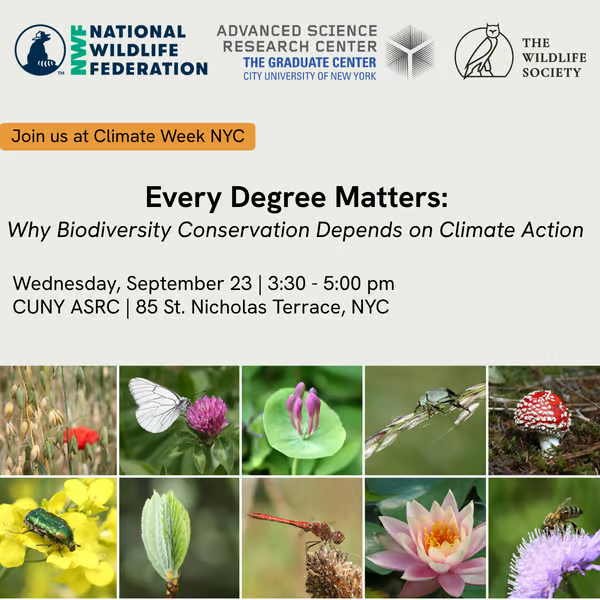
WHEN September 23, 2026 @ 3:30pm–5:00pm WHERE CUNY Advanced Science Research Center JOIN https://luma.com/9ivgd5ba Rapid biodiversity loss and accelerating climate change are connected crises. Under the worst case scenarios for greenhouse gas emissions in the 21st century, up to 30 percent of wildlife species could go extinct. Weather and climate…WHEN September 23, 2026 @ 3:30pm–5:00pm WHERE CUNY Advanced Science Research Center JOIN https://luma.com/9ivgd5ba Rapid biodiversity loss and accelerating climate change are connected crises. Under the worst case scenarios for greenhouse gas emissions in the 21st century, up to 30 percent of wildlife species could go extinct. Weather and climate influence almost every aspect of animal life and behavior, from reproduction and life cycles to species interactions and distribution. Yet all too often, wildlife conservation and climate action have been treated as separate disciplines, with separate solutions. Join the National Wil dlife Federation , The Wildlife Society , and CUNY’s Advanced Science Research Center Environmental Science Initiative to discuss the urgency of climate action for conservation – what the latest science says about the intersection between climate change and biodiversity, and what solutions are available to both help w ildlife adapt to climate change, and to mitigate future effects, and why every fraction of a degree matters for species. Speakers include: Dr. Peter Groffman, Professor, Environmental Sciences Initiative, CUNY ASRC Peter’s research focuses on terrestrial biogeochemistry with a focus on nitrogen dynamics, especially gases. Projects have ranged across multiple scales from microbial/molecular scale analyses to field/ecosystem scale measurement of fluxes using geochemical and isotope approaches, to landscape and regional scale work using remote sensing, geographic information systems and simulation models. Much of his research is focused at two National Science Foundation funded Long Term Ecological Research sites; Hubbard Brook, New Hampshire and Baltimore, MD. During his career, he has authored over 300 publications, with more than 85 as primary author. Peter was a Convening Lead Author for the 2013 U.S. National Climate Assessment Chapter on Ecosystems, Biodiversity and Ecosystem Services and a lead author for the Second (Wetlands) and Third (North America) Assessment Reports of the Intergovernmental Program on Climate Change (IPCC). Dr. Diane Pataki, Chief Scientist and Vice President for Science, National Wildlife Federation Trained as an ecologist, Diane’s work has spanned the impacts of climate change on ecosystems, the role of human and biological processes in air and water resources, and interactions between urbanization, landscape management, and biodiversity. Her recent projects have been focused on nature-based solutions for sustainable cities and communities. Diane has a B.A. in environmental science from Barnard College and an M.S. and Ph.D. in ecology from Duke University. She is the former Director of the Arizona State University (ASU) School of Sustainability, the founder and former Chief Strategy Officer of the ASU-led and National Science Foundation-supported Southwest Sustainability Innovation Engine (SWSIE), and a Foundation Professor in the ASU School of Sustainability. She has also served as the Associate Vice President for Research, Associate Dean, and Professor of Biology at the University of Utah, and the founding director of the University of California, Irvine Center for Environmental Biology and the Steele-Burnand Anza Borrego Desert Research Center. Dr. Amanda Rodewald, Garvin Professor and Senior Director of Center for Avian Population Studies, Natural Resources and the Environment Section, Cornell University Amanda is the Garvin Professor and Senior Director of the Center for Avian Population Studies (CAPS) at the Cornell Lab of Ornithology, a Faculty Director with the Cornell Atkinson Center for Sustainability, and a faculty member in the Department of Natural Resources and the Environment at Cornell University. Prior to joining Cornell in 2013, she spent 13 years as a professor at Ohio State University. Since 2000, she has published >190 scientific papers, an Ornithology textbook, 10 book chapters, and >75 popular articles and commentaries, and has served as the primary advisor for 10 post-docs, 20 Ph.D. students, and 19 M.S. students. Amanda is a fellow of the American Association for the Advancement of Science (AAAS) and the American Ornithological Society, from which she received the William Brewster Award in 2022. She serves on the Science Advisory Board of the U.S. Environmental Protection Agency, has testified before Congress about conservation issues, and is regularly featured in radio programs, short films, podcasts, and news articles. Sarah Grimké Aucoin, Chief of Education & Wildlife, NYC Parks Sarah’s tenure in NYC Parks spans 25 years of innovation and programmatic expansion in the areas of environmental education, outdoor adventure, active conservation and wildlife management. As Chief of Education & Wildlife, she oversees the Urban Park Rangers, Teaching & Learning Support, and the Wildlife Unit, whose mission is to promote coexistence between people and urban wildlife in New York city. As an informed resource for citizens and policymakers, the Wildlife Unit serves as an ambassador for New York City’s diverse wildlife communities and seeks to create a future where wildlife is a familiar, understood, and indispensable part of New York City’s urban landscape. She has a rich and accomplished academic background that includes a Bachelor of Arts degree in Biology from the University of California – Santa Cruz, and a Master of Science degree in Ecology from the University of Louisiana. She is an accomplished writer and researcher, having written and published a number of peer-reviewed monographs on subjects including the behavior of larval amphibians, the philosophy of declining amphibian populations, and the sexual bias in studies of animal behavior. Sarah has been a member of The Wildlife Society and the Urban Wildlife Working Group since 2015, and a board member of the Urban Wildlife Working Group since 2018.
The Wildlife Society has introduced enhanced website search capabilities designed to help members, students, researchers and conservation professionals quickly access the resources most relevant to their needs. The upgraded search experience delivers more accurate results across the extensive collection of publications, news articles, webinars, podcasts, policy updates and professional development…The Wildlife Society has introduced enhanced website search capabilities designed to help members, students, researchers and conservation professionals quickly access the resources most relevant to their needs. The upgraded search experience delivers more accurate results across the extensive collection of publications, news articles, webinars, podcasts, policy updates and professional development content on wildlife.org . To access the search feature, select the magnifying glass at the top right of any wildlife.org webpage. From there, you can choose to search everything, only website content or all of our resources. Searching only for website content provides a quick way to find a TWS webpage of interest. This search excludes web articles and other resources so that you can get to the core webpage you’re looking for with fewer clicks. Interested in learning more about a TWS program or working group? Then the web content search is for you. If you’re ready to discover decades of valuable content across our entire network of resources, then select “Search Resources.” We’ve merged all of our resource databases into one central hub so that you can spend less time searching for what you need. Search a topic of interest and discover TWS peer-reviewed publications, news articles, webinars, podcasts, position statements, technical reviews and policy letters from our entire network of organization units, all in one place. This is your one-stop shop for everything TWS. “When building the website, we wanted to create something unique and useful for our members,” said Chief Program Officer Cameron Kovach. “Where else can you search for peer-reviewed content alongside decades of news content, webinars and podcasts? There’s nothing else like this made specifically for wildlife professionals.” Looking for a specific resource? Use the filters to limit the search to a specific category or categories. For example, applying the “Position Statement” and “Issue Statement” filters will show you all TWS policy statements on a particular topic. Want to see the full catalog of webinars? Apply the “webinar” filter and keep the search bar empty. The results will be every single webinar hosted by TWS. You now have the ability to customize your search to be as broad or as narrow as you wish. These improvements reflect TWS’ ongoing commitment to providing accessible, user-friendly digital tools that support wildlife professionals and conservation practitioners around the world. “In addition to assisting wildlife professionals, these new search tools will also bring our growing catalog of open access science directly to our vast public audience,” Kovach said. “Visitors to wildlife.org will no longer need to know how or where to search for peer-reviewed science. We’re bringing it directly to them.” Visit wildlife.org today and explore the new search experience. Article by Cameron J. Kovach
Debug Pest Control, a leading pest management provider serving Rhode Island, Massachusetts, and Connecticut, today announced the acquisition of Bee Smart Pest Control, a well-established pest control company based in East Hampton, Conn. This strategic acquisition strengthens Debug Pest Control’s footprint in Connecticut while enhancing service capacity and continuity for…Debug Pest Control, a leading pest management provider serving Rhode Island, Massachusetts, and Connecticut, today announced the acquisition of Bee Smart Pest Control, a well-established pest control company based in East Hampton, Conn. This strategic acquisition strengthens Debug Pest Control’s footprint in Connecticut while enhancing service capacity and continuity for Bee Smart’s loyal customer base. Bee […] The post Debug Pest Control expands with acquisition of Bee Smart Pest Control first appeared on Pest Management Professional.
Invasive swamp eels that escaped from breeding ponds or were released by fisherman as bait in South Florida are systematically wiping out native amphibian species in the Everglades. “There has been about a 75% decline in amphibian abundances [in the Everglades] in the last 30 years,” said Hunter Howell, who…Invasive swamp eels that escaped from breeding ponds or were released by fisherman as bait in South Florida are systematically wiping out native amphibian species in the Everglades. “There has been about a 75% decline in amphibian abundances [in the Everglades] in the last 30 years,” said Hunter Howell, who spent his PhD at the University of Miami working on the conservation of Everglades reptiles and amphibians. The invasive swamp eels, which were only introduced a little over a decade ago, will be difficult to control, spelling problems for native species, Howell fears. The Asian swamp eel ( Monopterus albus ) is considered a delicacy in parts of Asia, Howell said, which may be part of the reason why it was introduced in the first place. The invasion likely began in Taylor Slough, a drainage area in southeastern Florida near the city of Homestead in the years leading up to 2012. Howell said that Asian swamp eels likely escaped from or were released from backyard fish breeding ponds in the area. “We’ve known about Asian swamp eels for some time,” Howell said. The eels quickly began to spread out from the Homestead area, likely traveling through levies and canals that authorities use for flood control and water management in the region. Over the same period, native amphibians began to precipitously decline. An earlier paper published in 2023 found that swamp eels caused a “complete ecosystem collapse” by knocking native fish and crayfish down by 85-93% in the Everglades, Howell said. “If you don’t have these small fish and crayfish in the Everglades—that’s what all the native birds, fish and amphibians are consuming,” he said. The largest amphibian survey of the Everglades In a study published recently in Freshwater Biology , Howell and his colleagues also began tracking the state of Everglades’ amphibians through a massive undertaking that involved sampling across national parks, water conservation areas and wildlife refuges. During his PhD work at the University of Miami when he conducted this work, Howell trekked through the Everglades by boat, helicopter and foot. He set baited traps, conducted visual surveys and recorded sounds at 30 sites across an area the size of Delaware. Every day for two months, he spent time setting and checking traps in the area. He saw bobcats ( Lynx rufus ) and invasive Burmese pythons ( Python bivittatus ) and once bumped over an alligator ( Alligator mississippiensis ) in the water—and it bumped him back. “That was pretty scary,” Howell said. At night, he could sometimes hear the mating bellows of adult male alligators around him. Once, the team trapped a four-foot alligator in one of their amphibian traps—it was a struggle to release the animal. Other times, he had to wade through chest-deep water while looking at gators around him. All of these experiences resulted in the most geographically complete amphibian survey ever conducted in the Everglades, Howell said. Since nobody had conducted such surveys to this extent in the past, the team couldn’t compare the state of amphibians across the region relative to previous years. However, other long-term monitoring conducted by Everglades National Park staff and Florida International University researchers has shown an estimated 74-84% declines in amphibian abundances in the past three decades across the park and an adjacent water conservation area. They also found that amphibians—particularly more aquatic ones—dropped in numbers the closer they were to Taylor Slough, ground zero for swamp eel introduction. In Taylor Slough, itself, they didn’t capture a single amphibian in the marsh—not even a tadpole. Compared to parts of the Everglades farther north, where “the frog calls give you headaches” because they ring so loudly and numerously, Howell said, Taylor Slough was nearly silent, except for the calls of tree-bound amphibians, like squirrel tree frogs ( Dryophytes squirellus ), green tree frogs ( D. cinereus ) and invasive Cuban tree frogs ( Osteopilus septentrionalis )—it’s hard for eels to climb trees. Southern leopard frogs ( Lithobates sphenocephalus ), a once-common genus according to prior studies conducted in Everglades National Park about 20 years ago, were undetected within Everglades National Park during his surveys. “They went from the most common species to basically not persisting in 20 years,” Howell said. In areas that had more swamp eels outside of Taylor Slough, tree frogs and large salamanders like greater sirens ( Siren lacertina ) and two-toed amphiumas ( Amphiuma means ) were nearly the only species that persisted. But Howell said that it’s likely that the eels will still compete with these large salamanders as they target the same food niche, potentially causing future extirpations. The team didn’t see a single Everglades dwarf siren ( Pseudobranchus axanthus belli ) in their surveys. “I think that’s one of those subspecies that could easily just blink out of existence,” Howell said. “We know basically nothing about them.” Models reveal extent of swamp eel effect The team also ran models to determine what was causing differences in the abundance and community composition of native amphibians. They included possible factors, including water level changes over time, soil nitrogen and phosphorus levels, the spread of diseases like chytrid or ranavirus, pollution and other human-caused problems. While some of these factors played a role in declines, the biggest predictor of declines was the presence of swamp eels. “Once you include the swamp eels [in the model], none of that matters anymore,” Howell said. “And it’s not even close,” he added—swamp eels had more than twice the impact of any other factor. Due to differences in nutrient levels that wash into the vast wetlands from the north, many aquatic species were already more abundant in the north compared to the south. Howell said the impact of swamp eels is exaggerating this effect, with low amphibian abundance in the south and larger numbers in the north. But he worries that swamp eels will soon make it up to these amphibian strongholds—they have been confirmed all the way up near Tampa already, he said. Other than sounding the alarm, Howell is unsure of what can be done to stop the eels. Part of the reason they are so successful lies in their biology. Whereas other invasive species have eventually been controlled naturally by dry periods that occasionally hit South Florida, Asian swamp eels can basically breathe air, unlike most fish. They can cross dry land, and in very dry periods, they burrow into the mud, which may help them persist when water dries up. “They’re incredible creatures—it just sucks that they are here,” he said. “Controlling an invasive species in a system like this is basically impossible.” Article by Joshua Rapp Learn
Endangered Species Day this year falls on May 15, 2026. In 2006 the U.S. Congress designated the third Friday in May as Endangered Species Day (ESD). ESD spotlights and advances … Read more The post What in the Hellbender? appeared first on The National Wildlife Federation Blog.
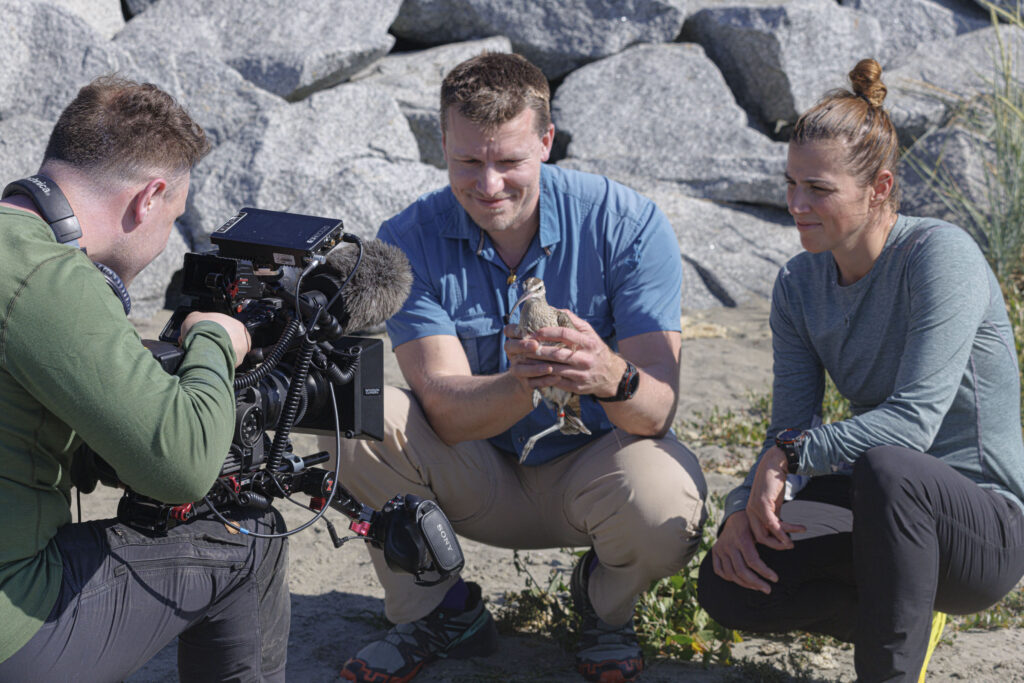
WATCH EPISODE Every year, millions of birds make some of the most arduous journeys in the natural world. The Hudsonian whimbrel ( Numenius hudsonicus ) travels from its breeding grounds in Alaska’s High Arctic to as far south as Argentina. Two endurance athletes are preparing to embark on their own…WATCH EPISODE Every year, millions of birds make some of the most arduous journeys in the natural world. The Hudsonian whimbrel ( Numenius hudsonicus ) travels from its breeding grounds in Alaska’s High Arctic to as far south as Argentina. Two endurance athletes are preparing to embark on their own journey to follow the paths of three GPS-tracked whimbrels. In this episode of “Our Wild Lives,” Timm Döbert, tropical ecologist and scientific explorer, and Leanna Carriere, extreme athlete, join us to talk about their upcoming 30,000 kilometer expedition titled, “Wings of Survival.’’ Döbert and Carriere will spend the next nine months on their bikes for 10 hours a day, crossing through 15 different countries along their route. Along the way, they will host virtual classrooms, conduct scientific studies and use the power of storytelling to bring awareness to migratory bird conservation. “Our Wild Lives” is The Wildlife Society’s biweekly podcast, sharing compelling stories from wildlife professionals doing critical work around the world. Your hosts, Katie Perkins and Ed Arnett, of The Wildlife Society, bring you thought-provoking conversations with leading experts and emerging voices. Further reading: About Wings of Survival – https://www.wingsofsurvival.com/ About the hudsonian whimbrel – https://abcbirds.org/birds/whimbrel/ Podcast by Katie Perkins
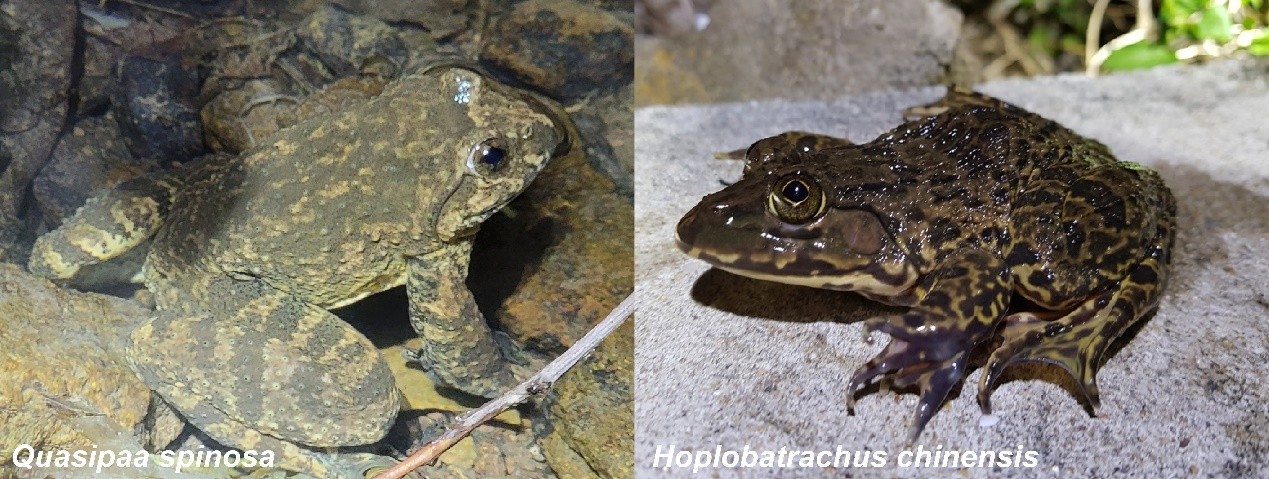
Back to Resources Researchers were surprised to receive Chinese spiny frogs (left) in lieu of Chinese edible frogs (right) from an online marketplace. Credit: Ama��l Borz��e/iNaturalist The value that imperiled species offer to ecosystems may be priceless, but genetic research reveals online vendors are selling vulnerable amphibians as common edible…Back to Resources Researchers were surprised to receive Chinese spiny frogs (left) in lieu of Chinese edible frogs (right) from an online marketplace. Credit: Ama��l Borz��e/iNaturalist The value that imperiled species offer to ecosystems may be priceless, but genetic research reveals online vendors are selling vulnerable amphibians as common edible frogs. A team of researchers bought four frogs listed as Chinese edible frogs ( Hoplobatrachus chinensis ) from a popular online marketplace with the intention of studying that species’ evolutionary history. But when the supposed snacks were delivered, they noticed some morphological differences. Using genetic barcoding, the team found that all four specimens were Chinese spiny frogs ( Quasipaa spinosa ), which appear similar to edible frogs at a glance. Chinese spiny frogs are considered vulnerable by the International Union for Conservation of Nature. “If traded individuals are incorrectly identified, trade data may not accurately reflect which species are being exploited,” the researchers of the study , published recently in Nature Conservation , said in a press release. They believe the problem is more widespread among amphibians often consumed as food. They advocated for more routine DNA-based monitoring of wildlife trade and customs inspections to reduce these mistaken identities. Read more at Pensoft Blog .
The National Wildlife Federation (NWF) is excited to award Butler University the Plastics Reduction Partner Bronze level certification for their efforts to reduce single-use plastic waste on campus. Butler University, a … Read more The post Butler University in Indianapolis certifies as a National Wildlife Federation Plastics Reduction Partner appeared…The National Wildlife Federation (NWF) is excited to award Butler University the Plastics Reduction Partner Bronze level certification for their efforts to reduce single-use plastic waste on campus. Butler University, a … Read more The post Butler University in Indianapolis certifies as a National Wildlife Federation Plastics Reduction Partner appeared first on The National Wildlife Federation Blog.