Bat Exclusion Richardson Bats getting into a home in Richardson usually means there’s a small gap somewhere along the roofline, vents, fascia, or chimney area that’s acting like an open invitation. In this video, AAAC Wildlife Removal of Dallas walks through what bat exclusion in Richardson actually means, and why…Bat Exclusion Richardson Bats getting into a home in Richardson usually means there’s a small gap somewhere along the roofline, vents, fascia, or chimney area that’s acting like an open invitation. In this video, AAAC Wildlife Removal of Dallas walks through what bat exclusion in Richardson actually means, and why it’s the safest, most reliable way to solve a bat problem long-term. Instead of quick fixes that only shift the issue around, exclusion focuses on getting bats out and making sure they can’t get back in. You’ll see the key parts of the process, including how entry points are identified, how one-way exclusion devices work, and why sealing needs to be done carefully and in the right order. We also cover what homeowners should watch for, like staining near gaps, fluttering sounds at dusk or dawn, and guano buildup that can create odor and contamination risks. If you’ve been thinking “It’s just a small opening,” this video will make it clear how quickly that can turn into a recurring problem if it isn’t addressed properly. If you suspect bats are active in your attic or walls, avoid sealing openings on your own or disturbing the roost, because it can create bigger issues and leave you with bats trapped inside. Use this video as a clear guide to what professional exclusion looks like and what to expect during an inspection. For bat exclusion in Richardson, AAAC Wildlife Removal of Dallas can help with humane removal, proper sealing, and prevention steps designed to keep your home quiet and protected. More on YouTube: https://www.youtube.com/watch?v=8gOgmq6W3f8 On Sound Cloud: https://soundcloud.com/aaac-wildlife-removal/bat-exclusion-richardson AAAC Wildlife Removal of Nashville offers professional and humane wildlife removal services in Nashville, Tennessee. Contact Us: AAAC Wildlife Removal of Dallas 4925 Greenville Ave Ste 200 Dallas, TX 75206 469-423-9299 Website: https://dallas.aaacwildliferemoval.com/ Email: dallas@aaacwildliferemoval.com Find us around the web: YouTube: https://www.youtube.com/channel/UCU5vEuK2NZCsb56Bv21OQYw Facebook: https://www.facebook.com/profile.php?id=61565888967944 Twitter: https://x.com/aacOfDallas SoundCloud: https://soundcloud.com/aaac-wildlife-removal
Bat Removal Richardson Bats in Richardson can be sneaky. You might notice a faint scratching in the walls, chirping near the roofline at dusk, or small droppings collecting near an entry point, then suddenly it clicks that a colony may be settling in. This SoundCloud playlist is your practical audio…Bat Removal Richardson Bats in Richardson can be sneaky. You might notice a faint scratching in the walls, chirping near the roofline at dusk, or small droppings collecting near an entry point, then suddenly it clicks that a colony may be settling in. This SoundCloud playlist is your practical audio guide to bat removal in Richardson, built to help homeowners understand what bat activity looks like, why bats choose attics and roof gaps, and why it’s smart to handle it quickly and correctly. AAAC Wildlife Removal of Dallas keeps it clear, calm, and focused on real steps that protect your home. Inside these tracks, we break down how professional bat removal works, since bats are not handled like typical nuisance wildlife. You’ll learn what an inspection looks for, how entry points are identified around soffits, vents, chimneys, and roofline gaps, and why exclusion is the foundation of long-term results. We also cover safety basics that matter, including why bats should never be handled without proper training and why cleanup can be part of the process when droppings or odor build up in attic spaces. To wrap it all up, this playlist focuses on prevention so you can keep bats from returning season after season. You’ll hear about sealing and reinforcement, the timing that matters for successful bat exclusion, and what homeowners in Richardson can check around the exterior of their home to reduce risk. If you need bat removal in Richardson done professionally, AAAC Wildlife Removal of Dallas is ready to help you get your home back to quiet, safe, and secure. More on Sound Cloud: https://soundcloud.com/aaac-wildlife-removal/sets/aaac-wildlife-removal-richardson On YouTube: https://www.youtube.com/playlist?list=PL-CvX5jnKygpBEAIr5heA6QzwI8AuoDvq AAAC Wildlife Removal of Dallas provides professional and humane wildlife removal services in Dallas, Texas. Contact Us: AAAC Wildlife Removal of Dallas 4925 Greenville Ave Ste 200 Dallas, TX 75206 469-423-9299 Website: https://dallas.aaacwildliferemoval.com/ Email: dallas@aaacwildliferemoval.com Find us around the web: YouTube: https://www.youtube.com/channel/UCU5vEuK2NZCsb56Bv21OQYw Facebook: https://www.facebook.com/profile.php?id=61565888967944 Twitter: https://x.com/aacOfDallas SoundCloud: https://soundcloud.com/aaac-wildlife-dallas
“Chocolate, avocados, onions, and moldy foods are some of the most poisonous items you can leave out for squirrels. Even small amounts of these everyday ingredients can cause serious health issues—or be fatal—for these sensitive rodents.” Squirrels may look harmless scampering across your fence or chasing each other up a…“Chocolate, avocados, onions, and moldy foods are some of the most poisonous items you can leave out for squirrels. Even small amounts of these everyday ingredients can cause serious health issues—or be fatal—for these sensitive rodents.” Squirrels may look harmless scampering across your fence or chasing each other up a tree, but when they show up in your attic or tear through your garden, that charm disappears fast. In leafy neighborhoods where parks are close by and backyard bird feeders are everywhere, it’s no surprise that squirrels are regular visitors—and sometimes uninvited tenants. While many people enjoy watching them or even tossing out food, what you leave behind can actually be dangerous to squirrels—and a bigger headache for you without proper squirrel control . This article isn’t about harming wildlife. It’s about knowing what food is poisonous to squirrels so you don’t accidentally invite them in or make them sick. If you’ve been leaving out scraps, filling feeders, or composting without thinking twice, there’s a good chance you’re creating a squirrel buffet without even realizing it. Let’s break down what to avoid, what to secure, and how to protect both your home and the squirrels from a bad encounter. What Is The Most Dangerous Foods for Squirrels? Chocolate and Caffeinated Products Chocolate is one of the most toxic substances you can accidentally leave out for squirrels or any rodent. It contains theobromine—a stimulant that these small animals can’t metabolize effectively. Just a small amount from a brownie, chocolate almond bar, or sugar-filled candy can trigger tremors, elevated heart rate, or seizures in squirrels. Since they have such fast metabolisms and tiny bodies, the toxic effects hit hard and fast, often with serious consequences. Caffeinated foods and drinks are equally dangerous. Coffee grounds , soda spills, or chocolate-covered espresso beans tossed into a compost pile can be life-threatening if a squirrel gets into them. Where outdoor parties and backyard BBQs are common, it’s easy for sugary or caffeine-rich snacks to end up where rodents roam. To keep squirrels safe and your property clear of unwelcome visitors, make it a habit to clean up thoroughly and store all sweet or stimulant-laced foods securely. Avocados Avocados contain persin, a fungicidal toxin found in the fruit’s skin, pit, and even its leaves. While persin might not harm humans, it can be toxic to many animals, including squirrels. The risk isn’t just in eating an avocado—squirrels that nibble on a discarded peel, chewed seed, or exposed pit can experience digestive issues or worse. What makes this even more concerning is how easily avocado waste can be overlooked, especially in compost bins. If you’re growing avocado trees or preparing guacamole from scratch, this is something to stay mindful of. As urban farming and composting become more popular, the risk of accidentally exposing squirrels to this toxic fruit increases. Make sure avocado scraps are properly sealed or discarded, and if you have a tree, regularly clear fallen fruit from the yard. It’s better to be safe than to unknowingly poison a local animal. Onions, Garlic, and Spicy Foods While these aromatic kitchen staples may keep your chili full of flavor, they spell serious trouble for squirrels. Onions and garlic contain compounds that can damage red blood cells, leading to anemia and other health complications. The danger extends to cooked dishes, too. If a squirrel gets into leftover food seasoned with garlic or onions, even in small amounts, it can suffer lasting effects. In worst cases, repeated exposure can be fatal over time. Spicy foods also pack a punch that squirrels can’t handle. Hot sauce remnants, chili powder, or discarded tacos can cause severe digestive distress. Where spicy dishes are a staple, food waste often ends up in outdoor bins or compost piles. Make sure spicy scraps are stored in critter-proof containers, and avoid tossing seasoned leftovers near your patio or yard. The goal isn’t just to avoid harming squirrels—it’s to stop inviting them altogether. Alcohol and Fermented Fruit Alcohol might seem like an unlikely threat to wildlife, but squirrels are highly sensitive to it. Whether it’s beer spills from a tailgate, wine left out on the porch, or sugary cocktails left on patio tables, these drinks can lead to disorientation, slowed reaction time, and eventually liver failure in squirrels. Their small bodies can’t handle even trace amounts, and it doesn’t take much to put them in serious danger. Another sneaky culprit? Overripe or fermenting fruit, especially in backyards with peach, fig, or persimmon trees. As the fruit falls and begins to break down, it can release natural alcohols that attract squirrels and get them intoxicated. They may stagger, fall from trees, or become easy prey for predators. Regularly clean up fruit from the ground and keep alcoholic beverages secure during outdoor events. Salty Snacks and Chips Salt is another ingredient that can easily disrupt a squirrel’s internal balance. While humans can handle a salty snack during a football game or backyard hangout, squirrels don’t process salt well. Even a few bites of junk food like chips, pretzels, or salted walnut snacks can dehydrate them and overwork their kidneys. These types of treats also contain added sugar and artificial ingredients that offer zero nutritional value for squirrels—making them both harmful and useless from a dietary perspective. Many of these items—especially sugary breakfast cereals or processed snack mixes—are casually dropped or tossed outside without much thought. But to a hungry squirrel, that forgotten bowl of cereal or spilled trail mix is a full meal. Where outdoor events, food trucks, and weekend cookouts are part of the culture, squirrels quickly learn where the good stuff is. Cleaning up sugary crumbs and sealing snack waste tightly are easy steps that help discourage squirrels from turning your yard into their favorite buffet line. Surprising “Healthy” Foods That Still Poisonous To Squirrels Not all squirrel-dangerous foods are obviously harmful. Some look totally natural or even nutritious—but for squirrels, they can cause more harm than good. These foods often show up in gardens, bird feeders, compost piles, or well-meaning attempts to “feed the wildlife.” Here’s what to watch for. Raw Corn (Especially Moldy Corn) Corn might seem harmless—it’s a common ingredient in bird seed, livestock feed, and even human snacks. But when corn starts to mold, it can develop aflatoxins, which are highly toxic to squirrels and many other animals. Aflatoxins are produced by certain types of fungi and can affect liver function, immune systems, and even lead to cancer in wildlife. A squirrel doesn’t have to eat much moldy corn for it to cause serious internal damage. The risk goes up during warm, humid stretches—especially in summer—when moisture speeds up mold growth. Corn that’s left outside for too long, stored improperly in feeders, or tossed into compost piles can quickly become a hidden hazard. If you’re putting out corn in a feeder, store it in a dry place, change it frequently, and never offer anything that smells off or looks discolored. It’s not just about nutrition—it’s about safety. Bread and Processed Carbs Bread might feel like a safe, throwaway snack for critters—but it’s actually a poor and potentially harmful food choice for squirrels. Bread, crackers, and other refined carbs offer little to no nutrition, and they can expand in a squirrel’s stomach, leading to bloating or discomfort. In some cases, processed bread products contain preservatives and additives that are hard for squirrels to digest, weakening their system over time. Squirrels that eat too much bread often end up malnourished despite feeling full. This is especially common in neighborhoods where residents leave out food “just to be nice.” Unfortunately, the kindness backfires. Instead of helping, you may be attracting squirrels that grow dependent on an unhealthy food source—and more likely to take up permanent residence in your attic. If you want to be squirrel-friendly, stick to natural deterrents and avoid the bread basket. Peanuts (Especially Salted or Moldy) Peanuts are a bit of a wildcard. While they’re often seen in squirrel food blends or used to lure wildlife for photos, they aren’t actually nuts—they’re legumes. And when they’re salted, roasted, or worse, moldy, they become a serious risk. Moldy peanuts, like corn, can carry aflatoxins that attack a squirrel’s liver and immune system. Salted peanuts, on the other hand, can cause dehydration and kidney stress. This matters because many people use peanuts to feed birds or squirrels without realizing the risks. In fact, some birdseed mixes from big-box stores still include them. If you’re trying to keep squirrels away from your yard—or avoid poisoning them by accident—skip the peanuts. And if you must use them, go for raw, unsalted, and fresh, and use a squirrel-proof bird feeder so your effort to help one species doesn’t endanger another. Foods That Attract Squirrels (But Shouldn’t) Some foods might not be poisonous, but they’re basically neon signs saying “Free Snacks Here!” for squirrels. These attractants can lead to more frequent visits, nesting, and eventual infestations. If you’re trying to squirrel-proof your yard or keep them from invading your home, these are the items to manage carefully. Bird Seed and Pet Food Bird feeders are one of the top culprits for squirrel problems. Many blends contain sunflower seeds, millet, corn, and peanuts—aka squirrel candy. Once they find a reliable food source, squirrels will return again and again, sometimes destroying the feeder in the process. The same goes for pet food left outside. Dry kibble and wet food alike are high-protein, calorie-dense meals that squirrels will happily devour. Where backyard birdwatching is popular and outdoor pet bowls are commo
“The number one killer of squirrels isn’t cars or disease—it’s predators like hawks, owls, coyotes, and even outdoor cats.” Squirrels may look like carefree little acrobats racing across trees and rooftops, but their survival isn’t as easy as it seems. These animals face constant threats every single day, from predators…“The number one killer of squirrels isn’t cars or disease—it’s predators like hawks, owls, coyotes, and even outdoor cats.” Squirrels may look like carefree little acrobats racing across trees and rooftops, but their survival isn’t as easy as it seems. These animals face constant threats every single day, from predators overhead to dangers on the ground, and not all of them make it through a season alive. That leaves many people wondering: what is the number one killer of squirrels? The answer might surprise you. While many assume cars or harsh weather take the top spot, it’s actually predators that claim the most squirrel lives. Hawks, owls, snakes, coyotes, and even free-roaming cats are a squirrel’s biggest danger. Understanding this helps homeowners see why squirrels often move closer to houses, attics, and neighborhoods where they hope to find safety from the natural threats outside. The Top Threat: Predators in the Wild The number one killer of squirrels is predation. Despite their quick reflexes and acrobatic skills, squirrels are a vital part of the food chain. Hawks, owls, coyotes, and other hunters rely on them for survival, which keeps squirrel populations in balance. While this is a natural process, it also explains why squirrels frequently push closer to human homes in search of safety. In cities and their surrounding suburbs, predators are never far away. Open fields, wooded areas, and even neighborhood parks provide hunting grounds where squirrels are easy targets. Young squirrels and those caught foraging in open spaces are the most vulnerable, but even experienced adults can be taken by surprise when predators strike quickly and silently. Main Predators of Squirrels: Hawks and Owls – These birds of prey swoop down at high speeds, often leaving squirrels no time to react. Daytime hunters like hawks and nighttime hunters like owls make squirrels vulnerable around the clock. Coyotes – Opportunistic and adaptable, coyotes hunt squirrels both in wooded areas and near the edges of neighborhoods. Their presence has grown in urban areas, creating constant pressure on local squirrel populations. Snakes – Many snakes target young or unsuspecting squirrels near nests. Arboreal snakes can climb trees and ambush squirrels directly in their nests, making them especially dangerous to litters. Domestic Cats – Outdoor cats are surprisingly effective hunters and kill a significant number of squirrels each year. Unlike natural predators, cats often hunt for sport, which adds even more pressure to local populations. Foxes – While not as common in suburbs, foxes still roam rural and park areas, and squirrels are a frequent target when other prey is scarce. Predation not only reduces squirrel numbers but also changes their behavior. In urban settings, squirrels may avoid open yards or wooded edges where predators are active, instead climbing into attics, garages, and rooflines. These man-made shelters offer protection from natural enemies, but they create new problems for homeowners when squirrels start nesting indoors. Other Major Causes of Squirrel Death Road Traffic Collisions with vehicles are one of the most visible dangers to squirrels living in urban and suburban areas. These animals often dart across busy roads without hesitation, making them highly vulnerable during rush hours. Unfortunately, their natural zigzag running pattern—meant to escape predators—often makes it harder for drivers to avoid them. Morning and evening are peak times for squirrel activity, which also line up with commuter traffic. As neighborhoods expand and roads cut through wooded areas, more squirrels find themselves in harm’s way. For many urban squirrels, cars are a daily hazard that significantly shortens their lifespan. Disease and Parasites Squirrels are also at risk from illnesses like squirrel pox, mange, and respiratory infections. These diseases can weaken entire populations, especially when squirrels live in close proximity to one another. Parasites such as ticks, fleas, and internal worms further add to the burden, often leading to slow declines in health. Dense squirrel populations in parks and neighborhoods make it easier for diseases to spread. While not always immediately fatal, these conditions lower a squirrel’s ability to escape predators or survive harsh weather, ultimately increasing mortality rates. Starvation and Harsh Weather Although squirrels are skilled food gatherers, starvation does occur, particularly in times of drought or after severe winters. When natural food sources like acorns or berries run short, squirrels struggle to find enough to survive. Young squirrels and weaker adults are often hit the hardest. Harsh weather also plays a role in survival. Extreme summer heat can dehydrate squirrels quickly, while unexpected freezes during winter can wipe out food stashes. These seasonal challenges make food security a constant battle for squirrels year-round. Human Hazards Human activity poses another serious risk to squirrels. Poison left out for rodents, improperly set traps, and accidental electrocution on power lines all claim squirrel lives. While these may not always be intentional, the consequences can be deadly for urban wildlife. DIY removal attempts also put squirrels in danger, and in many cases, create risks for homeowners as well. Improper handling can lead to injury, property damage, and health hazards. This is why professional wildlife control is always the safer and more humane option. Why This Matters for Homeowners The constant threats squirrels face in the wild—predators, cars, disease, and harsh weather—often push them toward the safety of human homes. Attics, soffits, and garages provide secure shelter where squirrels can escape predators and extreme temperatures. For them, your property isn’t just convenient, it’s a lifeline. Unfortunately, this survival instinct creates serious problems for homeowners. Once inside, squirrels can chew wires, tear insulation, and damage structural wood, all while leaving behind droppings that pose health risks. What seems like a harmless guest can quickly escalate into costly repairs and dangerous hazards. Understanding why squirrels seek shelter helps explain why infestations are so common. By recognizing the pressures these animals face outdoors, homeowners can better appreciate the importance of prevention. Addressing entry points early ensures your attic doesn’t become the next refuge for a desperate squirrel. How AAAC Wildlife Removal Can Help Humane Removal At AAAC Wildlife Removal, the focus is always on safe and humane solutions. Instead of harmful traps or poisons, trained specialists use proven techniques to remove squirrels without causing unnecessary suffering. This approach protects the animals while keeping your home and family safe from unintended consequences. Humane removal also reduces the chance of future issues. By addressing the infestation correctly from the start, you avoid problems like dead animals in walls or attics, which can create odor and sanitation concerns. It’s the responsible way to restore balance without making things worse. Exclusion and Prevention Once squirrels are removed, the next critical step is sealing off entry points. Professionals carefully inspect the roofline, soffits, vents, and chimneys to find where squirrels are sneaking in. These vulnerable spots are then sealed with durable materials designed to withstand chewing and weather conditions. Prevention is just as important as removal. By closing access points, you ensure squirrels don’t come back, reducing the cycle of infestation. Homeowners benefit from long-term peace of mind knowing their property is protected against repeat invasions. Repairs and Cleanup Squirrels often leave behind extensive damage that needs professional attention. Chewed wires, shredded insulation, and droppings are not just a nuisance—they can become fire hazards and health risks if ignored. AAAC’s team offers repair and sanitation services to restore your attic to a safe, clean condition. Cleanup also helps prevent future problems. Removing droppings and nesting materials eliminates odors and bacteria that could attract other wildlife. A thorough restoration ensures your home is safe for your family while discouraging pests from returning. Conclusion: Nature’s Balance and Homeowner Action Predators may be the number one killer of squirrels, but they’re far from the only threat these animals face. Disease, traffic, weather, and human hazards all play a role in shortening squirrel lifespans. These challenges often explain why squirrels seek the safety of attics, garages, and rooflines when the outdoors becomes too dangerous. For homeowners, this survival instinct can turn into an expensive headache. Once inside, squirrels can damage insulation, chew through electrical wiring, and leave droppings that create serious health concerns. Ignoring the problem rarely makes it go away—in fact, it usually leads to more damage over time. The good news is you don’t have to deal with it alone. AAAC Wildlife Removal specializes in humane squirrel removal, exclusion, and cleanup to keep your home safe. If you’ve noticed scratching in your attic or other signs of squirrel activity, call AAAC today and let the experts protect your home while keeping nature in balance. Take Action Today Don’t wait until a squirrel infestation turns into costly damage. Protect your home with safe, humane, and effective wildlife removal services. AAAC Wildlife Removal is ready to help you solve the problem fast and prevent it from happening again. 📞 Call us today or request an inspection online to keep your home squirrel-free—for good.
Get Rid Of Bats Richardson If you’re trying to get rid of bats in Richardson, you’re probably hearing fluttering in the attic, seeing bats exit around dusk, or noticing droppings near the roofline or vents. In Richardson and across Dallas, TX, bats can slip through surprisingly small openings along soffits,…Get Rid Of Bats Richardson If you’re trying to get rid of bats in Richardson, you’re probably hearing fluttering in the attic, seeing bats exit around dusk, or noticing droppings near the roofline or vents. In Richardson and across Dallas, TX, bats can slip through surprisingly small openings along soffits, fascia gaps, attic vents, chimneys, and roof edges. Once they find a quiet, warm spot, they can roost for weeks or months, and the longer they stay, the more likely you’ll deal with odors, staining, and cleanup needs. Getting rid of bats the right way is all about humane exclusion and prevention, not quick fixes. A proper service starts with an inspection to pinpoint the exact entry points, then installs one-way devices so bats can leave safely without getting trapped inside. After that, every gap and vulnerable area gets sealed so they can’t return. Cleanup may also be recommended if guano has built up or insulation has been contaminated, since that can create lingering smells and potential health concerns. AAAC Wildlife Removal Dallas helps homeowners get rid of bats in Richardson and throughout Dallas, TX with a proven, exclusion-focused approach that solves the root problem. If you think bats are in your attic or walls, schedule an inspection so you can get clear next steps and a straightforward plan. You’ll get your space back, and keep it protected long after the bats are gone. More on YouTube: https://www.youtube.com/watch?v=IC1G9Ymxx7U On Sound Cloud: https://soundcloud.com/aaac-wildlife-removal/get-rid-of-bats-richardson AAAC Wildlife Removal of Nashville offers professional and humane wildlife removal services in Nashville, Tennessee. Contact Us: AAAC Wildlife Removal of Dallas 4925 Greenville Ave Ste 200 Dallas, TX 75206 469-423-9299 Website: https://dallas.aaacwildliferemoval.com/ Email: dallas@aaacwildliferemoval.com Find us around the web: YouTube: https://www.youtube.com/channel/UCU5vEuK2NZCsb56Bv21OQYw Facebook: https://www.facebook.com/profile.php?id=61565888967944 Twitter: https://x.com/aacOfDallas SoundCloud: https://soundcloud.com/aaac-wildlife-removal
United States Department of Agriculture: Animal and Plant Health Inspection Service Wildlife Damage Management Technical Series Date of this Version 3-2023 Document Type Article Citation Witmer, G., J. Grant and K. Cross. 2023. Prairie Dogs. Wildlife Damage Management Technical Series. USDA, APHIS, WS National Wildlife Research Center. Fort Collins, Colorado.…United States Department of Agriculture: Animal and Plant Health Inspection Service Wildlife Damage Management Technical Series Date of this Version 3-2023 Document Type Article Citation Witmer, G., J. Grant and K. Cross. 2023. Prairie Dogs. Wildlife Damage Management Technical Series. USDA, APHIS, WS National Wildlife Research Center. Fort Collins, Colorado. 16p. Abstract Prairie dogs (Cynomys spp.) occur throughout the prairie states of middle North America from Mexico northward into Canada. They occupy a variety of habitats from prairies to high mountain valleys and sage brush-dominated deserts. The most common species is the black-tailed prairie dog (Cynomys ludovicianus; Figure 1). Prairie dogs are considered a “keystone species.” They provide habitat for many other native, grassland species. Prairie dogs live in colonies or “towns” that can span hundreds to thousands of acres. Depending on the species, their presence is evident by their burrow system. Despite the many ecosystem benefits prairie dogs provide by modifying grasslands, they also create conflicts with people when their activities cause damage. This damage can occur on agricultural lands, as well as in urban and suburban settings. Utah and Mexican prairie dogs are listed as threatened or endangered species and are protected by law. Contact the State wildlife agency and/or the U.S. Fish and Wildlife Service (USFWS) for specific requirements and options regarding damage management methods for these species. If a prairie dog colony contains endangered black-footed ferrets (Mustela nigripes), options for prairie dog control are more restricted. Responsible and professional reduction or elimination of wildlife damage is the goal of wildlife damage management practitioners. This is best accomplished through an integrated approach. No single method is effective in every situation, and success is optimized when damage management is initiated early, consistently, and adaptively using a variety of methods. Because the legality of different methods varies by State, consult local laws and regulations prior to implementing any method. In addition, regulations may require that a survey be conducted to determine if threatened or endangered species are present. DOWNLOADS Since March 20, 2023 COinS
Bat Removal Near Me Richardson If you’re searching “bat removal near me Richardson”, there’s a good chance you’ve noticed bats flying near your roof at dusk, heard light scratching or fluttering in the attic, or found droppings around entry points. In Richardson and across Dallas, TX, bats can slip into…Bat Removal Near Me Richardson If you’re searching “bat removal near me Richardson”, there’s a good chance you’ve noticed bats flying near your roof at dusk, heard light scratching or fluttering in the attic, or found droppings around entry points. In Richardson and across Dallas, TX, bats can slip into tiny openings along rooflines, soffits, vents, chimneys, and fascia gaps, then settle in where it’s warm and quiet. The sooner you act, the easier it usually is to prevent a bigger colony, stronger odors, and more cleanup work. Professional bat removal is not a spray-and-pray situation. The right approach is a thorough inspection, followed by humane exclusion that allows bats to exit safely, then sealing all potential entry points so they can’t return. This matters because bats are important wildlife and removal needs to be done carefully and legally, especially during seasons when pups may be present. After exclusion, cleanup may be recommended if there’s guano buildup, stained insulation, or lingering smell, since those can create health concerns over time. AAAC Wildlife Removal Dallas provides bat removal services in Richardson and throughout Dallas, TX, focused on safe exclusion and long-term prevention. If you want a local team that knows what bat entry points look like on North Texas homes, reach out to schedule an inspection. You’ll get clear next steps, a plan that protects your home, and confidence that the bats stay out. More on YouTube: https://www.youtube.com/watch?v=IOhh9mrNRVU On Sound Cloud: https://soundcloud.com/aaac-wildlife-removal/get-rid-of-bats-richardson AAAC Wildlife Removal of Nashville offers professional and humane wildlife removal services in Nashville, Tennessee. Contact Us: AAAC Wildlife Removal of Dallas 4925 Greenville Ave Ste 200 Dallas, TX 75206 469-423-9299 Website: https://dallas.aaacwildliferemoval.com/ Email: dallas@aaacwildliferemoval.com Find us around the web: YouTube: https://www.youtube.com/channel/UCU5vEuK2NZCsb56Bv21OQYw Facebook: https://www.facebook.com/profile.php?id=61565888967944 Twitter: https://x.com/aacOfDallas SoundCloud: https://soundcloud.com/aaac-wildlife-removal
Kelly J. Koriakin , United States Department of Agriculture, Animal and Plant Health Inspection Service, Wildlife Services, National Wildlife Research Center, Fort Collins, Colorado Follow Kurt C. VerCauteren , United States Department of Agriculture, Animal and Plant Health Inspection Service, Wildlife Services, National Wildlife Research Center, Fort Collins, Colorado Follow…Kelly J. Koriakin , United States Department of Agriculture, Animal and Plant Health Inspection Service, Wildlife Services, National Wildlife Research Center, Fort Collins, Colorado Follow Kurt C. VerCauteren , United States Department of Agriculture, Animal and Plant Health Inspection Service, Wildlife Services, National Wildlife Research Center, Fort Collins, Colorado Follow Nathan P. Snow , United States Department of Agriculture, Animal and Plant Health Inspection Service, Wildlife Services, National Wildlife Research Center, Fort Collins, Colorado Follow D. Buck Jolley , United States Department of Agriculture, Animal and Plant Health Inspection Service, Wildlife Services, Guam State Office Citation Proceedings, 31st Vertebrate Pest Conference, paper 10 Published August 30, 2024 Editors: Robert M. Timm and D. M. Woods Abstract Interspecific interactions are crucial in shaping ecosystem dynamics (Connell 1983, Tilman 1987, Barbosa and Castellanos 2005). Non-native ungulates have been introduced across the globe (Ferretti and Lovari 2014, Volery et al. 2021) and in environments where multiple invasives thrive, these co-occurring sympatric species may shift spatiotemporal patterns to minimize interspecific competition (Schoener 1974, Chesson 2000). Spatiotemporal shifts can lead to cascading effects to the native flora and fauna (Simberloff and Von Holle 1999). Given the potential negative impacts, understanding these interactions is vital for effective management of these ecosystems. Two invasive ungulates, the wild pig ( Sus scrofa ) and the Philippine deer ( Rusa marianna ), have inhabited much of Guam since their introduction in the 1600s and 1700s (Intoh 1986, Wiles et al. 1999) and both have been associated with significant ecological damage throughout the island (Conroy 1989). Despite sharing similar invasive roles, they seemingly coexist throughout areas of Guam. Subsequently, efforts are increasingly put forth to remove both species from partitioned areas at one time. To aid these efforts and understand invasive species interactions, we studied the seasonal spatiotemporal patterns of wild pigs and Philippine deer during February 2021-March 2022. Specifically, we used GPS collars from 39 wild pigs and 22 deer to examine spatial and temporal partitioning and assess dynamic spatiotemporal interactions between interspecific dyads at seasonal scales. We investigated spatial partitioning of wild pigs and deer by estimating the spatial overlap between home ranges and core areas of interspecific neighboring dyads. We estimated temporal overlap in diel activity to evaluate temporal partitioning between the species. Lastly, we examined dynamic spatiotemporal interactions, those that occur simultaneously in space and time, by estimating movement interactions between neighboring interspecific dyads to understand attraction and avoidance. We found spatial overlap between the species decreased significantly in core areas compared to home ranges in both seasons. Within home ranges, deer were approximately 3 times more likely to be within pig ranges than vice versa. This effect diminished at core areas such that deer were only 1.3× more likely to be within pig core ranges than vice versa. Temporal overlap of activity between wild pigs and deer was very high during dry and wet seasons, with overlapping activity peaks during crepuscular hours. At a critical distance threshold of 50m, we estimated 77 movement interactions from 58 dyad pairs over 3 seasons and found that only 2 (2.6%) and 4 (5.2%) movement interactions were considered avoidant and attractive, respectively, and the remaining 71 interactions (92.2%) were neutral. Our results showed that, while not extensive, spatial overlap between wild pigs and deer occurred between home ranges. More exclusive use of core areas suggests that spatial partitioning of these smaller space use areas might serve as one mechanism facilitating coexistence between wild pigs and Philippine deer. Additionally, we did not see any evidence of temporal partitioning or avoidance between wild pigs and deer. Using this knowledge, managers can maximize efficiency of managing invasive ungulates by combining efforts during crepuscular hours when both species are most active. Management activities to remove these species simultaneously may be most effective in areas of known spatial overlap (i.e., home range overlap) and, if that is unknown, managers should default to removal efforts within deer ranges as the odds of encountering both species is higher than in pig’s home ranges.
Bat Removal Richardson If you’re hearing fluttering in the attic, spotting bats near the roofline at dusk, or finding droppings around your home, it’s smart to take it seriously. Bat removal in Richardson is a common need across the Dallas, TX area, especially in homes with small gaps along soffits,…Bat Removal Richardson If you’re hearing fluttering in the attic, spotting bats near the roofline at dusk, or finding droppings around your home, it’s smart to take it seriously. Bat removal in Richardson is a common need across the Dallas, TX area, especially in homes with small gaps along soffits, vents, chimneys, and roof edges where bats can squeeze in. Once they settle in, colonies can grow quietly, and the longer they stay, the more cleanup and repair work you may end up needing. Safe bat removal is all about doing it the right way: a detailed inspection to confirm entry points, a humane exclusion plan that lets bats exit without returning, and sealing every possible access spot so your attic stays protected. This process matters because bats are a protected species in many cases, and removal methods need to be compliant, careful, and effective. After exclusion, cleanup may be recommended if there’s guano buildup, odors, or contaminated insulation, since those can create health concerns and lingering smells. AAAC Wildlife Removal Dallas helps homeowners with bat removal in Richardson and throughout Dallas, TX, focusing on humane exclusion and long-term prevention. If you suspect bats in your attic or walls, reach out to schedule an inspection so you can get clear next steps and a straightforward plan. The goal is simple: get the bats out safely and keep them from coming back. More on YouTube: https://www.youtube.com/watch?v=l1qvmbQ6mtQ On Sound Cloud: https://soundcloud.com/aaac-wildlife-removal/bat-removal-richardson AAAC Wildlife Removal of Nashville offers professional and humane wildlife removal services in Nashville, Tennessee. Contact Us: AAAC Wildlife Removal of Dallas 4925 Greenville Ave Ste 200 Dallas, TX 75206 469-423-9299 Website: https://dallas.aaacwildliferemoval.com/ Email: dallas@aaacwildliferemoval.com Find us around the web: YouTube: https://www.youtube.com/channel/UCU5vEuK2NZCsb56Bv21OQYw Facebook: https://www.facebook.com/profile.php?id=61565888967944 Twitter: https://x.com/aacOfDallas SoundCloud: https://soundcloud.com/aaac-wildlife-removal
United States Department of Agriculture: Animal and Plant Health Inspection Service United States Department of Agriculture Wildlife Services: Staff Publications Cole A. Bleke , Utah State University Follow Eric M. Gese , United States Department of Agriculture, Wildlife Services, National Wildlife Research Center, Utah Field Station, Logan, Utah Follow Juan…United States Department of Agriculture: Animal and Plant Health Inspection Service United States Department of Agriculture Wildlife Services: Staff Publications Cole A. Bleke , Utah State University Follow Eric M. Gese , United States Department of Agriculture, Wildlife Services, National Wildlife Research Center, Utah Field Station, Logan, Utah Follow Juan J. Villalba , Utah State University Shane B. Roberts , Idaho Department of Fish and Game Susannah S. French , Utah State University Follow ORCID IDs Bleke https://orcid.org/0000-0003-1919-1559 Gese https://orcid.org/0000-0001-8910-7397 French https://orcid.org/0000-0001-8923-9728 Document Type Article Date of this Version 2024 Citation MDPI Animals (2024) 14: 1468 Abstract Monitoring vital rates allowsmanagers to estimate trends in growth rates of ungulate populations. However, connecting the influence of nutrition on ungulate demography is challenging. Noninvasive sampling offers a low-cost, low-effort alternative for measuring nutritional indices, allowing for an increased understanding of the mechanistic relationships between environmental factors, nutrition, and specific population vital rates. We examined the temporal influence of intrinsic and extrinsic factors on pronghorn ( Antilocapra americana ) fawn recruitment. We collected fresh fecal samples from adult female pronghorn in five subpopulations spanning three sampling periods associated with critical maternal life-history stages (late gestation, early lactation, breeding season) for 2 years to investigate both intra- and interannual influences. Intrinsic factors were fecal glucocorticoid metabolites (FGMs), nutritional indices (fecal nitrogen (FN) and 2,6-diaminopimelic acid (DAPA)), and dietary composition (protein intake of forbs, graminoids, legumes, other, shrubs), while the extrinsic factor was vegetative greenness (normalized difference vegetation index (NDVI)). We found variations in DAPA, protein intake of forbs, variation in forb protein intake, and protein intake of legumes during late gestation positively influenced fawn recruitment. Fecal nitrogen during early lactation showed the strongest positive influence on the recruitment of any measured parameter. Finally, breeding season NDVI and the variation in DAPA values positively influenced the subsequent year’s fawn recruitment. Our longitudinal study enabled us to investigate which parameter was most important to specific periods of fawn development and recruitment. We combined the results across five subpopulations, but interpretation and subsequent management decisions should be made at the subpopulation level such that pronghorn subpopulations with low recruitment can be positively influenced by increasing nitrogen on the landscape available to adult females during the early lactation period. As the use of noninvasive monitoring methods continues to expand, we believe our methodologies and results can be broadly applied to other ungulate monitoring programs. DOWNLOADS Since November 23, 2024 Included in Natural Resources and Conservation Commons , Natural Resources Management and Policy Commons , Other Environmental Sciences Commons , Other Veterinary Medicine Commons , Population Biology Commons , Terrestrial and Aquatic Ecology Commons , Veterinary Infectious Diseases Commons , Veterinary Microbiology and Immunobiology Commons , Veterinary Preventive Medicine, Epidemiology, and Public Health Commons , Zoology Commons COinS
Back to Resources A hibernating Indiana bat. When the endangered bats roost, size matters the most. Credit: USFWS/Ann Froschauer Endangered Indiana bats benefit from both early- and late-successional trees, researchers found, suggesting managers should take both of these into account when implementing forest management practices. Scientists wanted to identify factors…Back to Resources A hibernating Indiana bat. When the endangered bats roost, size matters the most. Credit: USFWS/Ann Froschauer Endangered Indiana bats benefit from both early- and late-successional trees, researchers found, suggesting managers should take both of these into account when implementing forest management practices. Scientists wanted to identify factors that make trees suitable roosts for the Indiana bat ( Myotis sodalis ), which has been listed as federally endangered since 1967 because of its shrinking habitat. The researchers radiotagged and tracked bats to their roosts, surveying 95 roost trees across study sites in central Indiana, the Great Swamp National Wildlife Refuge in New Jersey and the Southern Appalachian Mountains. The team analyzed tree rings to determine how old the roost trees were. They found that tree size was most important when it came to suitable shelter for the Indiana bats—it didn’t matter how old the tree was. “Diameter predicts which trees house the most bats,” said Joe Pettit, associate professor at Minot State University and author of the study. “We’ve known that for a long time. Our question was specifically, ‘How can we quickly get to that diameter?’ And the answer is early-successional trees.” As a result, the researchers said age is not the main predictor for how many bats roost in a tree. “It means that we can grow big trees that do not need to be immensely old.” Read the study in Forest Ecology and Management .
A beautiful bevy of bats south of the border. 09.09.26 By Paul Hormick Mexican long-tongued bats feed on fruit and pollen from an agave in Mexico. By Daniel Vite/iNaturalist The country most associated with tacos, tequila, and sombreros is also a land of bats — with 135 distinct species who…A beautiful bevy of bats south of the border. 09.09.26 By Paul Hormick Mexican long-tongued bats feed on fruit and pollen from an agave in Mexico. By Daniel Vite/iNaturalist The country most associated with tacos, tequila, and sombreros is also a land of bats — with 135 distinct species who call the mountains, forests, and deserts of Mexico home. Of all these wonderous winged mammals, which ones might you encounter in the ancient land of the Aztecs? Jamaican Fruit-eating Bat Jamaican fruit-eating bats pluck, then carry fruit to roosts to eat and thus serve as important seed dispersers. By Christian Ziegler Jamaican fruit-eating bats ( Artibeus jamaicensis ) live in diverse habitats, from lush cloud forests to dry, deciduous woodlands throughout central and southern Mexico, Central America, Columbia, Venezuela, Ecuador, and the islands of the Caribbean, including (you guessed it) Jamaica. They roost in caves and hollow trees; they also fashion tent-like shelters for themselves from large leaves. These bats pluck, then carry fruit to roosts to eat and thus serve as important seed dispersers. This species also consumes pollen and nectar, with insects making up a small part of their diet. Females give birth twice a year, usually to a single pup. Mexican Free-tailed Bat Mexican free-tailed bats can attain an average flight speed of 60 mph and have set the bat speed record of almost 100 mph. By Amanda Stronza It’s a thrilling sight as millions of Mexican free-tailed bats ( Tadarida brasiliensis ) take to the summertime skies from Bracken Cave outside San Antonio, Texas and other sites throughout the American Southwest. During the cooler months of fall and winter, these insectivores migrate to Mexico and Central and South America. This undertaking may take little time, as this species is the swiftest of all bats. They can attain an average flight speed of 60 mph and have set the bat speed record of almost 100 mph. Great Fruit-eating Bat Great Fruit-eating can carry fruit weighing as much as one third of their body weight. By Christian Ziegler The great fruit-eating bat ( Artibeus lituratus ) has a membranous structure in its heart, which is found in no other mammal. Scientists are unsure what function the structure serves but have hypothesized it may keep the bat’s heart in the correct position while the bat roosts upside down. It may also serve in flight assistance or help this bat conserve energy. Great fruit-eating bats weigh in at little more than two ounces yet are surprisingly strong. They can carry fruit weighing as much as one third of their body weight. Gray Sac-winged Bat Gray sac-winged bats areis sheath-tailed bats, which is in reference to the membrane that stretches from ankle to ankle and which covers almost the entire length of these bats’ tails. By Josh Hydeman Another name for the family of sac-winged bats (Emballonuridae) is sheath-tailed bats, which is in reference to the membrane that stretches from ankle to ankle and which covers almost the entire length of these bats’ tails. Gray sac-winged bats ( Balantiopteryx plicata ) like to roost close to the mouths of caves, in barns, and in buildings close to a light source, usually in groups of about 50 and sometimes numbering as many as 10,000. This insectivore is found in arid climates from the southern tip of Baja and Northwest Mexico south through Central America. Common Vampire Bat Common vampire bats are well known for being social, often regurgitating food for friends and family who didn’t get enough to eat. By Sherri & Brock Fenton Everything about the common vampire bat ( Desmodus rotundus ) is adapted for them to get their bloody meals. Their agility in getting around on the ground lets them sneak up on their victims, which are usually large mammals, such as tapirs, or livestock, such as pigs, horses, and cows. Piercing skin with their razor-sharp incisors, they lap up blood flowing from the new wound, while an anticoagulant in their saliva prevents clotting (and has been developed into a medication that helps prevent strokes in humans). One of three extant bat species that drink blood, common vampire bats hunt their prey in tropical and subtropical woodlands, as well as open grasslands. They will roost with other bat species, usually in the darkest and highest places in trees, caves, abandoned buildings and mines. They tend to be the dominant species in these settings. And while that may all sound a bit gruesome, this species is well known for being social, often regurgitating food for friends and family who didn’t get enough to eat. They also groom each other! Greater Sac-winged Bat Male greater sac-winged bats hover in front of females, fanning vigorously to send the scent of their fragrant glandular secretion mixture the females’ way. By Charles M. Francis The courting ritual of the greater sac-winged bat ( Saccopteryx bilineata ) is, well . . . interesting. Males put drops of urine and glandular secretions into their sacs. While they are showing off for their female friends, the males hover in front of females, fanning vigorously to send the scent of the fragrant mixture her way. Males also ward off intruders by shaking this mixture towards bats outside their harem territory. They often roost on the outside of large trees in rainforests, where they feed on moths, flies, beetles, and butterflies. Pups make the equivalent of baby babbling noises, the first known example of mammal babbling outside of primates . Lesser Dog-like Bat Lesser dog-like bats won’t play fetch, but with their long, hairless snouts, they do resemble puppy dogs. By José Gabriel Martínez-Fonseca Dog-like bats, a genus of sac-winged bats, won’t play fetch, but with their long, hairless snouts, they do resemble puppy dogs. The lesser dog-like bat ( Peropteryx macrotis ) , the smallest species of this genus, lives in the southernmost regions of Mexico — Oaxaca, Chiapas, and Yucatan — with its habitat stretching into southern Brazil. Their moderately long fur varies from grey to brown and can even appear reddish. Small colonies of these insectivores roost in caves and sometimes in old buildings. Lesser dog-like bats breed throughout the year, with females giving birth to a single pup at a time. Mexican Long-tongued Bat The Mexican long-tongued bat’s tongue is covered with small hair-like papillae to gather the nectar. By Angel Trres/iNaturalist The Mexican long-tongued bat ( Choeronycteris mexicana ) really does have a very long tongue! Extending up to one third the length of its body, this bat uses its tongue to reach deep inside blooms. The tongue is covered with small hair-like papillae to gather the nectar. This Gene Simmons of the bat world also feeds on fruit and pollen from agaves. Their range extends into the Southwest of the United States, where they have been known to visit hummingbird feeders. The IUCN lists the Mexican long-tongued bat as Near Threatened, due to habitat loss. California and Arizona regard it as a species of Special Concern. Lesser Long-nosed Bat A lesser long-nosed bats feed on and pollinate agave, the plant used to make tequila and mezcal. By Bruce D. Taubert If you like your margaritas, you can thank a lesser long-nosed bat ( Leptonycteris yerbabuenae ) These medium-sized bats with short, brownish fur feed on and pollinate agave, the plant used to make tequila and mezcal. They use their long snouts to dig into night-blooming cacti, including the iconic desert saguaro. They also eat cactus fruits and might function as seed dispersers for some cacti species. Considered Near Threatened by the IUCN, Bat Conservation International’s Agave Restoration Initiative ensures that this and other species have reliable food sources during their migrations. So, raise a glass to nectar bats and agave. ¡Salud! Northern Yellow-shouldered Bat Northern yellow-shouldered bats prefer younger forests that have regenerated after disturbance, feeding on fruit from plants that first take root. By Charles M. Francis Once considered a subspecies of the little yellow-shouldered bat ( Sturnia lilium ) , a genetic study of the northern yellow-shouldered bat ( Sturnira parvidens ) in 2013 revealed this medium-sized bat to be a separate species. Broad-headed, with large ears, this species has thick, soft reddish or yellowish fur, which can sometimes be dark grey. They roost in tree cavities, most commonly in the understory of tropical forests that lie close to water or farms and prefer younger forests that have regenerated after disturbance, feeding on fruit from plants that first take root. Scientists can thus use this species as an indicator of forest succession. If you liked this Top 10 List, be sure to subscribe and never miss a Bat Pub post! Paul Hormick, author of the environmental newsletter The Green Dispatch , has spent the last 22 years writing about music, food, and the environment.
ORCID IDs Kristin Ellis https://orcid.org/0000-0003-2759-3670 Michael Anteau https://orcid.org/0000-0002-5173-5870 Lawrence Igl https://orcid.org/0000-0003-0530-7266 Aaron Pearse https://orcid.org/0000-0002-6137-1556 Jill Shaffer https://orcid.org/0000-0003-3172-0708 Christine A Ribic https://orcid.org/0000-0003-2583-1778 Josh Vest https://orcid.org/0000-0001-9664-4502 Marissa Ahlering https://orcid.org/0000-0002-3913-428X Anahit Amiri https://orcid.org/0009-0007-3853-7531 Kent Andersson https://orcid.org/0000-0002-6243-2752 Jacqueline Augustine https://orcid.org/0000-0001-9195-8799 Jeffrey Beck https://orcid.org/0000-0003-0236-7343 Adam Behney https://orcid.org/0000-0002-1076-7577 Jacy S Bernath-Plaisted https://orcid.org/0000-0003-4645-8132 Todd Bogenschutx https://orcid.org/0000-0003-0512-9738 Laruen…ORCID IDs Kristin Ellis https://orcid.org/0000-0003-2759-3670 Michael Anteau https://orcid.org/0000-0002-5173-5870 Lawrence Igl https://orcid.org/0000-0003-0530-7266 Aaron Pearse https://orcid.org/0000-0002-6137-1556 Jill Shaffer https://orcid.org/0000-0003-3172-0708 Christine A Ribic https://orcid.org/0000-0003-2583-1778 Josh Vest https://orcid.org/0000-0001-9664-4502 Marissa Ahlering https://orcid.org/0000-0002-3913-428X Anahit Amiri https://orcid.org/0009-0007-3853-7531 Kent Andersson https://orcid.org/0000-0002-6243-2752 Jacqueline Augustine https://orcid.org/0000-0001-9195-8799 Jeffrey Beck https://orcid.org/0000-0003-0236-7343 Adam Behney https://orcid.org/0000-0002-1076-7577 Jacy S Bernath-Plaisted https://orcid.org/0000-0003-4645-8132 Todd Bogenschutx https://orcid.org/0000-0003-0512-9738 Laruen Bortolotti https://orcid.org/0000-0003-1505-8427 Andy Boyce https://orcid.org/0000-0003-3508-6599 Jeffrey Brawn https://orcid.org/0000-0002-5158-0055 Andrew J Campomizzi https://orcid.org/0000-0002-3941-0010 Jay Carlisle https://orcid.org/0000-0003-1919-7408 Justin R Clarke https://orcid.org/0009-0004-2768-1384 Michael Conover https://orcid.org/0000-0003-2289-9590 Jaime J Coon https://orcid.org/0000-0002-6342-4690 Stephen Davis https://orcid.org/0000-0003-2645-6316 Duane Difenbach https://orcid.org/0000-0001-5111-1147 Johnathan Dinkins https://orcid.org/0000-0002-6421-0643 Andrew Dreelin https://orcid.org/0009-0006-2750-821X Victoria Dreitz https://orcid.org/0000-0002-9383-2329 Courtney Duchardt https://orcid.org/0000-0002-9383-2329 Michael Eichholz https://orcid.org/0000-0003-4592-8809 Susan Ellis-Felege https://orcid.org/0000-0002-4534-0055 Bradley Fedy https://orcid.org/0000-0003-3933-4043 Robert Fletcher https://orcid.org/0000-0003-1717-5707 Dillon Fogarty https://orcid.org/0000-0003-2541-4245 Pamela Garrettson https://orcid.org/0009-0004-2308-9826 Erin Gelling https://orcid.org/0000-0002-3940-5545 James Giocomo https://orcid.org/0000-0002-9230-2422 Kirsty Gurney https://orcid.org/0000-0001-8036-4725 Daivd Haukos https://orcid.org/0000-0001-5372-9960 Trapper Haynam https://orcid.org/0009-0005-3490-0423 Heather Herakovich https://orcid.org/0000-0001-8319-6800 James R Herkert https://orcid.org/0009-0002-2896-420X Jason M Hill https://orcid.org/0000-0003-0830-7253 Torre Hovick https://orcid.org/0000-0001-9192-8805 William Jensen https://orcid.org/0000-0002-9007-6628 Aaron Johnston https://orcid.org/0000-0003-4659-0504 Sydney-Marie Jones https://orcid.org/0009-0008-6584-0197 Carly Kelly https://orcid.org/0009-0001-8030-5984 Kaylan Kemink https://orcid.org/0000-0002-1404-0690 Chirs Kirol https://orcid.org/0000-0002-7723-8653 Robert Klaver https://orcid.org/0000-0002-3263-9701 Page E Klug https://orcid.org/0000-0002-0836-3901 Nicola Koper https://orcid.org/0000-0003-3576-9525 Kyle Kuechle https://orcid.org/0000-0002-4588-1775 David Londe https://orcid.org/0000-0002-8112-005X Cullen Mackenzie https://orcid.org/0000-0003-3488-1750 Ann McKellar https://orcid.org/0000-0002-7032-3759 Lance McNew https://orcid.org/0000-0003-0006-7304 Megan C Milligan https://orcid.org/0000-0001-8466-7803 Ashlee Minor https://orcid.org/0000-0001-9911-9885 Les Murray https://orcid.org/0009-0002-4925-0484 David Naugle https://orcid.org/0000-0001-9286-9878 Christopher Pollentier https://orcid.org/0000-0002-4071-3561 Larkin Powell https://orcid.org/0000-0003-0570-4210 Nancy Raginski https://orcid.org/0000-0001-8007-5309 Kaitlyn Reintsma https://orcid.org/0000-0002-9528-4434 Kevin Ringelman https://orcid.org/0000-0003-0299-3432 Scott Robinson https://orcid.org/0000-0003-1321-4924 Andres N Rosales https://orcid.org/0009-0001-1207-2787 Charlotte Roy https://orcid.org/0000-0002-4691-3089 Kayla A Ruth https://orcid.org/0000-0001-6672-7657 Brett K Sandercock https://orcid.org/0000-0002-9240-0268 Joseph Smith https://orcid.org/0000-0002-5242-2761 Kurt Smith https://orcid.org/0000-0003-4981-2918 Joshus Stafford https://orcid.org/0000-0001-7590-8708 Matthew D Stephenson https://orcid.org/0000-0001-8702-8556 Amber Swicegood https://orcid.org/0009-0004-4584-516X Evan Tanner https://orcid.org/0000-0003-0063-7004 Catrina Terry https://orcid.org/0009-0006-4205-4383 Ashley Tanner https://orcid.org/0000-0002-6376-5196 Brett L Walker https://orcid.org/0000-0003-1183-3449 Kimberly A With https://orcid.org/0000-0001-5570-1515 Benjamin Zuckerberg https://orcid.org/0000-0001-7412-4354 Citation Ellis, K. S., M. J. Anteau, L. D. Igl, et al. 2026. “ Phenological Flexibility in Nesting Grassland Birds Over a Half Century Informs Timing of Management.” Global Change Biology 32, no. 10: e71128. https://doi.org/10.1111/gcb.71128 . Abstract The timing of biological events for wildlife species reflects and influences ecological and evolutionary processes and helps guide management actions to meet conservation objectives. Climate change may cause phenological shifts across trophic levels and ecosystems, which can have broad ecological impacts. Shifts may also result in mistiming between management practices based on historical conditions and current biological events, reducing the effectiveness of natural resource management and conservation efforts. We analyzed nesting phenology patterns over recent decades across North America for 44 species of grassland-nesting birds, including waterfowl, upland gamebirds, shorebirds, and passerines, many of which have experienced precipitous population declines. Understanding nesting phenologies of these species is important to their conservation, as grassland management activities often conflict with reproductive periods leading to high nest and young mortality. We compiled a dataset of over 172,000 nest records spanning five decades and evaluated environmental factors influencing long-term shifts and short-term flexibility in nesting phenology. We found considerable variation in responses among species, with differences in both direction and magnitude of spatiotemporal effects on nest initiation dates. Notably, the community-level nesting season lengthened over time, but shifts exhibited spatial heterogeneity within this community of grassland birds. Nesting dates shifted asymmetrically across the breeding season with differential changes in early, peak, and late nesting dates whereas long-term changes were mediated by weather and geographic gradients. For example, nest initiation was earlier in warmer and wetter years. By applying a quantile-based analysis, we provide estimates of the full nesting period that could serve as a flexible tool for scheduling monitoring efforts and balancing management and human activities with periods of reduced nesting activity. Our collaborative effort illustrates the challenges and opportunities of collecting long-term data on avian communities necessary for answering questions across large regions but highlights the value of research coordination for bird conservation.
New research using dragonfly larvae has revealed that the great majority of national wildlife refuges in the U.S. have enough mercury to pose at least a moderate risk of impairment to wildlife, fish and humans. Mercury exposure can cause devastating effects to animals, even in places visitors often think of…New research using dragonfly larvae has revealed that the great majority of national wildlife refuges in the U.S. have enough mercury to pose at least a moderate risk of impairment to wildlife, fish and humans. Mercury exposure can cause devastating effects to animals, even in places visitors often think of as pristine and untouched. New research published in The Journal of Wildlife Management shows that 80% of the 30 refuges sampled across the contiguous U.S. for the study had at least one site with a moderate impairment risk. “It gives you an idea of how pervasive this issue is across the refuge system,” said Jennifer Wilkening, a research ecologist for the National Wildlife Refuge System (NWRS) and the study’s lead author. Kadrian Rugullies, an intern with American Conservation Experience, samples for dragonfly larvae in Cache River National Wildlife Refuge in Arkansas. Credit: Jennifer Wilkening The metamorphosis of the Dragonfly Mercury Project In 2013, the Dragonfly Mercury Project (DMP) started collecting the largest unified database of mercury in freshwater animals in the world, according to Sarah Nelson, the DMP’s founder, director of research at the Appalachian Mountain Club, and coauthor on the study. Mercury has natural sources, like forest fires, which are on the rise as climate change brings hotter, drier conditions. Fossil fuel-burning smokestacks and small-scale gold mining also release the contaminant into the atmosphere. And the chemistry of what happens next is complicated. After mercury comes back down to the ground in rain, snow or even in dust particles, it makes its way into waterways. Through various processes, including microbial activity, mercury is converted into methylmercury, its more toxic cousin. Methylmercury can easily make its way into the cells of living things, climbing the food chain and getting more and more concentrated each time a predator eats contaminated prey. Scientists keep dragonfly larvae, like these caught at the DeSoto National Wildlife Refuge in Iowa, in an ice tray before processing so they don’t eat each other. Credit: Jennifer Wilkening In the early 2010s during her graduate work, Nelson was investigating why some water bodies had relatively higher mercury concentrations than others. She wanted to better understand how different watershed factors, like soil chemistry, fire history and leaf litter, influenced how much mercury entered the food web. “That’s been the big puzzle that mercury scientists have been working on for a long time,” she said. Her team sampled precipitation, stream water and soils, and compared their mercury levels to amphibians and fish. But Nelson said what she found in the water didn’t always reflect the levels of mercury moving throughout the food web and potentially affecting animals and humans. Dragonfly larvae, it turned out, were a better biosentinel—creatures whose bodies could help scientists trace how the chemical moved through the biosphere. Dragonfly larvae are easy to catch, and citizen scientists can quickly sample an area. Nelson found that the mercury levels in the dragonflies closely matched up with what they expected to find. “That was sort of the eureka moment,” she said. Refuges for Mercury The DMP picked up steam, enlisting the help of thousands of citizen scientists through partnerships with the National Park Service and U.S. Geological Survey (USGS). The most recent expansion of the project started in 2020 with the NWRS. An Aeshnidae larvae that scientists sampled at Moosehorn National Wildlife Refuge in Maine is ready to be shipped to the lab for analysis. Credit: Jennifer Wilkening They found that 24 of the 30 refuges in the study had at least one site with a moderate risk of mercury impairment. Four refuges had at least one high-risk site and two had sites with severe impairment risk. There was also a drastic difference between the lowest and highest sites. The highest levels of mercury contamination were 1,000 times greater than the lowest samples. And this pattern almost exactly mirrored the contamination levels in national parks, which get way more visitors than refuges. Wildlife refuges are unique in that managers are frequently flooding certain areas of refuges and drying out others, mainly to create nesting or feeding areas for waterfowl. But mercury also moves with all this water, and refuge biologists are paying attention. “Even though we’re providing food and habitat for these waterfowl species, if we’re inadvertently exposing them to high levels of mercury at the same time, that’s a situation you would want to avoid,” Wilkening said. To Nelson, one of the major takeaways from the study is it reiterated, “just how variable the mercury concentrations can be from one water body to another,” she said. “That’s the same puzzle we’ve been working on for decades.” A group of kids check out the dragonfly larvae at Two Ponds National Wildlife Refuge in Colorado. Credit: Jennifer Wilkening The researchers also found that the mercury concentration across these sites can vary from year to year. For example, there were high levels of mercury at a refuge in New Mexico that earned the “severe” rating. But in the following years, the dragonfly larvae didn’t yield another severe rating. Atmospheric mercury levels have declined in recent decades due to global agreements, such as the Minamata Convention on Mercury, which is a legally binding global treaty limiting mercury pollution that went into effect in 2017. Even though the global community has taken some recent steps to control mercury pollution, the contaminant can stay in the environment for a long time. Jennifer Wilkening samples for dragonfly larvae at the Bill Williams River National Wildlife Refuge in Arizona. Courtesy of Jennifer Wilkening But Wilkening said her study is useful for thinking about what management strategies might help mitigate the higher mercury levels across the system. If managers have the right infrastructure and amount of water, they could adjust water levels and flow, for example. In the future, she wants to investigate the impact mercury concentration is having on wildlife population performance on the refuges and how different water management tactics might influence mercury methylation. Article by Olivia Milloway
Back to Resources The Endangered Species Committee, known as the ���God Squad,��� was last used three decades ago. Berardo62 The Trump administration is bringing together a committee that decides on exemptions to the Endangered Species Act (ESA) to determine if oil and gas development can move forward without considering protections…Back to Resources The Endangered Species Committee, known as the ���God Squad,��� was last used three decades ago. Berardo62 The Trump administration is bringing together a committee that decides on exemptions to the Endangered Species Act (ESA) to determine if oil and gas development can move forward without considering protections for threatened and endangered species. Created in 1978, the Endangered Species Committee—otherwise known as “The God Squad”—has the power to override species protections bestowed by the ESA when they conflict with federal projects. The committee has not convened in over 30 years. For an exemption to occur, it must meet strict criteria, and five of the seven members must vote in favor, finding that no reasonable alternatives exist and a project’s national or regional benefits outweigh potential harm to listed species. These criteria will now be examined in the Gulf of Mexico, recently renamed by the Trump administration as the Gulf of America, despite a report from the National Oceanic and Atmospheric Administration (NOAA), which warned that oil and gas activity could jeopardize the federally endangered Rice’s whale ( Balaenoptera ricei ). There are roughly 50 Rice’s whales left. The whale’s conservation will be weighed against economic and energy priorities outlined in an executive order declaring a National Energy Emergency. Read more in the Federal Register or watch the hearing on YouTube.
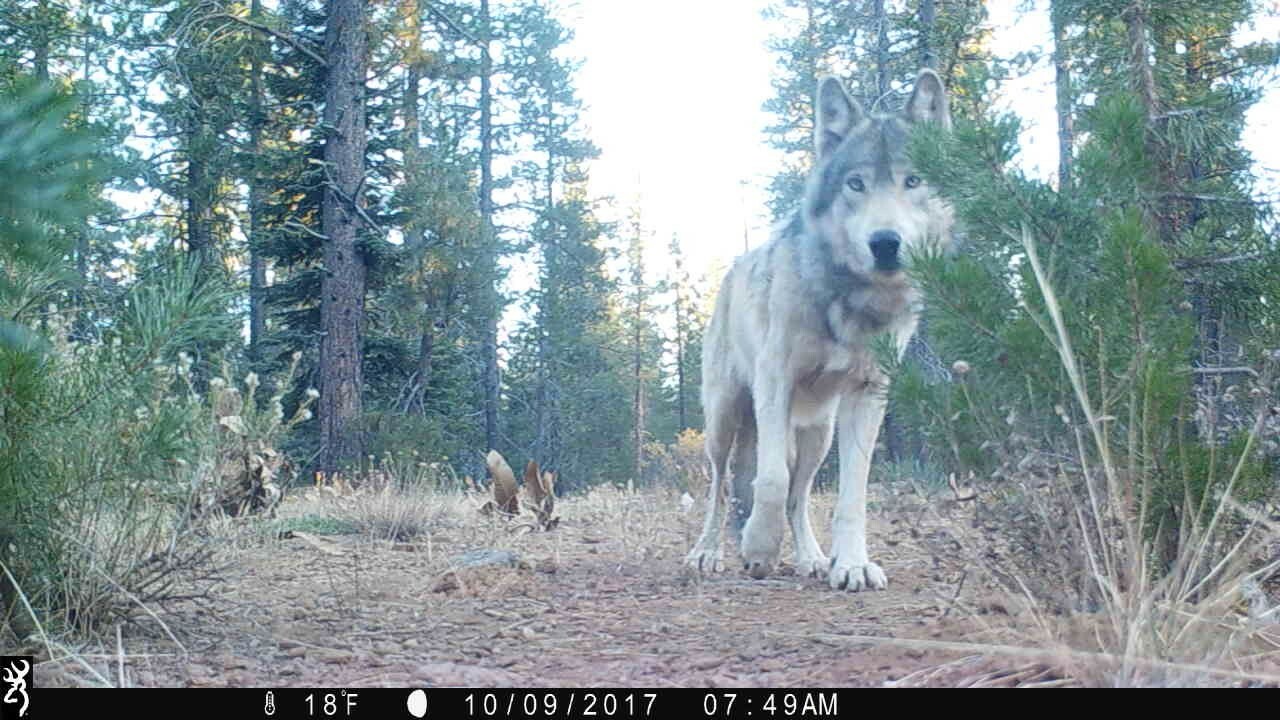
New research analyzing the scat of wolves in California has revealed that cattle is the main dish on their menu. “These results revealed that wolves in California’s human-modified landscape primarily satisfy their caloric requirements through livestock consumption, underscoring the considerable challenges posed by coexistence of wolves and humans within the…New research analyzing the scat of wolves in California has revealed that cattle is the main dish on their menu. “These results revealed that wolves in California’s human-modified landscape primarily satisfy their caloric requirements through livestock consumption, underscoring the considerable challenges posed by coexistence of wolves and humans within the state,” said the authors of the study published recently in PLOS One . The team found evidence of cattle in 72% of the scat samples they analyzed. Meanwhile, mule deer ( Odocoileus hemionus )—native, wild prey of gray wolves ( Canis lupus )—were only found in 45% of the samples. Wolves dispersed naturally into California from Oregon after decades of absence relatively recently. But in Northern California, the animals encountered landscapes depleted of large populations of native prey, like elk ( Cervus canadensis ) and deer, which are found in places like Montana, Wyoming and Canada. As a result, researchers believe they rely more on livestock, which are abundant in Northern California. “If you want to have these animals on the landscape, you know, you have to start kind of building back the full ecosystem,” said Neil Carter, a researcher from the University of Michigan who studies wolves but was not involved in this recent study. As a result of this finding and recent attacks of wolves on cattle, wildlife officials have allowed sheriffs in parts of the state to haze wolves using rubber bullets, paintballs, pepper balls and harassment techniques to keep the predators from livestock. Listen to the podcast about wolf scat analysis on NPR’s Shortwave , and read about the new hazing measures in The Sacramento Bee .
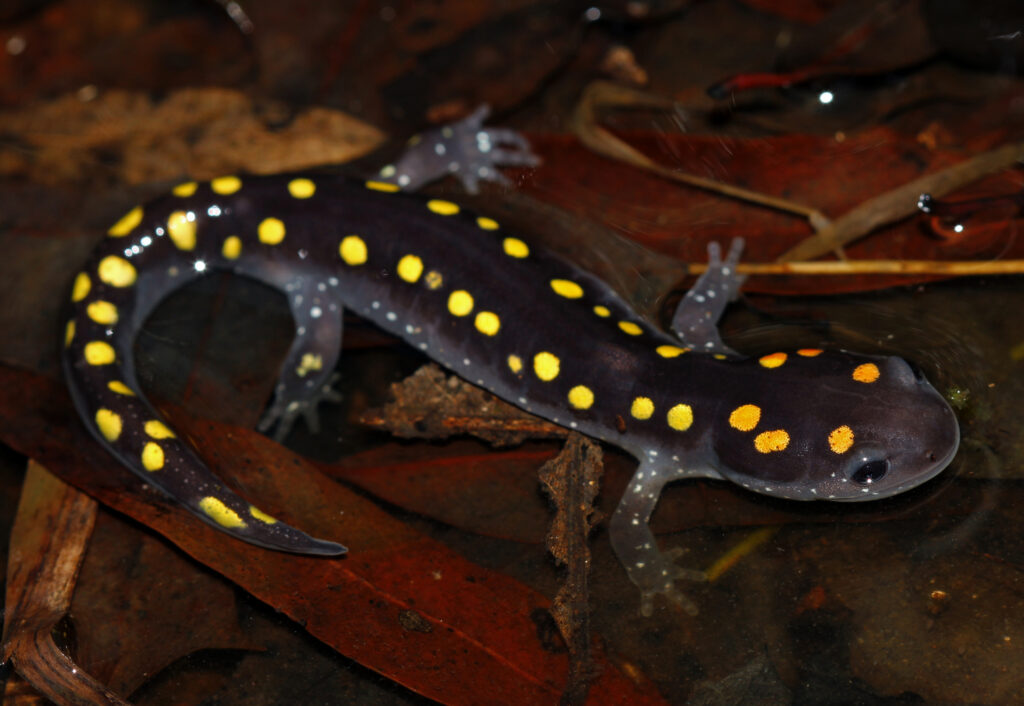
Back to Resources Spotted salamanders are native to the eastern United States and Canada. Credit: Peter Papluns Scientists are asking people to be alert as they investigate a new deadly pathogen killing native salamander species. The pathogen, originally found in nonnative salamanders sold as pets, causes abnormal shedding, skin lesions,…Back to Resources Spotted salamanders are native to the eastern United States and Canada. Credit: Peter Papluns Scientists are asking people to be alert as they investigate a new deadly pathogen killing native salamander species. The pathogen, originally found in nonnative salamanders sold as pets, causes abnormal shedding, skin lesions, sluggishness and a decreased appetite. It has a death rate of 35-55%. During laboratory trials, two native species—the spotted salamander ( Ambystoma maculatum ) and eastern newt ( Notophthalmus viridescens )—developed signs of illness after exposure to contaminated soils and water during laboratory trials. Currently, scientists don’t know if exposed animals carry the disease without exhibiting signs of it or if it impacts other animals. While no known wild animals have yet been infected, people are encouraged to report any symptoms through Partners in Amphibian and Reptile Conservation’s Herpetofaunal Disease Alert System . Read more at Partners in Amphibian and Reptile Conservation.
It was the winter of 2022, and hounds were already on the trail of a cougar fresh off a recent kill in the remote wilderness of northern British Columbia. Just a day earlier, Shane White’s colleague was conducting wolf surveys by helicopter when she spotted the cat. The cougar (…It was the winter of 2022, and hounds were already on the trail of a cougar fresh off a recent kill in the remote wilderness of northern British Columbia. Just a day earlier, Shane White’s colleague was conducting wolf surveys by helicopter when she spotted the cat. The cougar ( Puma concolor ) took off into the nearby timber as the chopper approached. But knowing that White was about to begin a project trapping cougars in the area to fit them with GPS tracking collars, the colleague immediately notified him. The very next day, White, a senior wildlife biologist for the provincial government of British Columbia and a TWS member, landed with a pack of hounds and their handler. The group quickly snowmobiled over to the meadow, which was only about two kilometers away, hoping the predator wasn’t completely scared away from its kill. White and his colleague Courtney Jones were trying to get a bearing on the cougar’s reported position when Jones suddenly cried out and pointed at the cat. “It was very Serengeti style, sitting in the open on top of a horse carcass,” White said. While he was behind on the snowmobile, it wasn’t long before White became part of the action. He could hear baying hounds getting louder as they came toward him. But before the pack—and its quarry—reached him, their barking noises picked up in intensity. They’d chased the cougar up a tree maybe 50 meters from where White had parked his snowmobile. He scrambled toward the tree, which held a large male cougar, and drew his dart gun. He aimed, took sight and fired. The dart shot out—well, fizzled out—and landed in the snow a few meters from the gun. There was an issue with the gas valve, and the gun had no pressure to propel the projectile forward. The cougar escaped, and the team was left just where it started on its project to fit GPS tracking collars to cougars in the Chilcotin Plateau in the Cariboo Region. “You adapt. The first year is definitely a learning process,” White said. Credit: Courtney Jones This cougar killed a lot more feral horses than that one that first put White and his hound contractors onto its scent. “He’s a pretty impressive cat—he’s given us a lot of data over the years,” White said. And that male wasn’t alone. For the next few years, tracking data from cougars and aerial surveys on wolf ( Canis lupus ) packs in the area revealed dozens of instances where the predators killed or scavenged feral horse carcasses in their study area. The data, which White and his colleagues published recently in a study in Ecology and Evolution , shows how these novel ungulates are fitting into the ecology of mountains and forests of central British Columbia, where there are few roads and a low density of humans. It’s also helping researchers determine if horses—by virtue of getting eaten—are having downstream effects on imperiled northern mountain caribou ( Rangifer tarandus caribou ) in the area. “We have data to suggest that they do subsidize predator communities,” White said. Credit: Dan Bings Mountain lions and wolves and bears—oh my! The first cougar the team collared wasn’t the end of their learning process. “It’s a very remote area—a lot of blood, sweat and trees have gone into getting this study off the ground and collars around their necks, but it’s been tremendously successful,” White said. White recalls one large animal they and their hounds tracked for 17 kilometers up and down mountain slopes. “What an impressive animal it was,” White said. They finally managed to get the animal up a tree. But just as they were getting ready to dart it, the cat jumped from the tree “into the abyss” down “steep, nasty country,” White said. Dusk was fast approaching, and temperatures were dropping. On average, White said the temperatures were around -15 degrees Celsius, but after dark it usually goes down to -20 or lower. At -30, the team doesn’t run surveys at all for safety reasons. They had to head home without deploying a cat collar that day. Credit: Cullen Sikkes “You never know how it’s going to go down,” White said. “Every cat’s different.” In all, the team—White is picture above on the left—collared 18 cougars from early 2022 to the summer of 2025. Credit: Shane White Several times, the team recollared some cats, such as the first one they captured, pictured in a tree on the right, when the batteries ran out. When GPS data showed clusters that appeared to be potential kills, the team, led by Julie Thomas, a PhD student at the University of Northern British Columbia, headed on snowmobiles or occasionally flew out via helicopter to investigate the kills in the most remote sites. They paired this cougar data with aerial surveys on wolf packs in the area from 2019 to 2025. Altogether, the team confirmed 58 instances of cougars preying on feral horses. They also documented 21 instances of wolves scavenging or preying on horses—the team observed the ones in the photo below near a horse herd. Credit: Shane White The team couldn’t always be sure if the predators had killed the horses in question or just scavenged the remains of a horse that killed by something else. Horses can die from natural causes, and bears can also prey on horses in this area, though the team didn’t look at that factor in this study. But they did see both black ( Ursus americanus ) and grizzly bears ( Ursus arctos horribilis ) on horse carcasses. And while foals are certainly among the predated horses, cougars and wolves were also killing adults. “I’ve been amazed at some of the kill sites we’ve gone to,” White said. “These are big horses, and they are getting taken down by a cougar.” Credit: Shane White Other researchers have documented cougars killing horses in the Great Basin area . Still, “to the best of our knowledge, these are the first published observations of wolves hunting feral horses and the first records of cougar predation of feral horses in British Columbia,” the authors wrote in their study. However, a month after the publication of White’s research, another study came out in The Journal of Wildlife Management showing evidence of Mexican wolves ( C. l. baileyi ) preying on feral horses in Arizona and New Mexico. The British Columbia study has implications for caribou ecology as well. The Itcha-Ilgachuz northern mountain caribou herd has precipitously dropped in recent decades. “They’ve declined from a peak of over 2,000 caribou back in 2003 to 385 in 2019,” White said. The herd on the Chilcotin Plateau moves from high elevations in the summer into valleys during the winter. Their winter range puts them into areas with plenty of feral horses and mule deer ( Odocoileus hemionus ). While the team didn’t study cougar predation on caribou directly for this paper, they did observe the cats taking them down. White believes that horses in the area are subsidizing predators, which in turn means wolves, cougars and perhaps bears are also incidentally taking more native ungulates like moose( Alces alces ) and caribou. Thomas is currently looking into this, but preliminary work has revealed that the presence of horses in the area is increasing predation on caribou. This could compound the ungulate’s problems, as mountain caribou, listed as special concern under Canada’s Species at Risk Act , may also suffer from other problems, such as competition from deer and moose prompted by human disturbance, White has found in other research . Credit: Shane White This article features research that was published in a TWS peer-reviewed journal. Individual online access to all TWS journal articles is a benefit of membership. Join TWS now to read the latest in wildlife research. This photo essay is part of an occasional series from The Wildlife Society featuring photos and video images of wildlife taken with camera traps and other equipment. Check out other entries in the series here . If you’re working on an interesting camera trap research project or one that has a series of good photos you’d like to share, email Josh at jl **** @ ****** fe.org . Article by Joshua Rapp Learn
Let’s talk about something every pest control business owner wrestles with: price increases. Read below for 5 tips for raising rates worry-free. Most of us know we should raise prices, but many delay it because we don’t want uncomfortable conversations, worried customers or potential cancellations. Here’s the reality: If you’re…Let’s talk about something every pest control business owner wrestles with: price increases. Read below for 5 tips for raising rates worry-free. Most of us know we should raise prices, but many delay it because we don’t want uncomfortable conversations, worried customers or potential cancellations. Here’s the reality: If you’re not raising prices right now, […] The post 5 tips for raising rates worry-free first appeared on Pest Management Professional.
Back to Resources A coyote looks out at Jericho Beach Park in Vancouver, Canada. Credit: Nathan Lewis Feeding, increasing habituation and an uptick in park visitors during the COVID-19 pandemic were just a few reasons Vancouver saw a large uptick in coyote attacks on humans several years ago. From December…Back to Resources A coyote looks out at Jericho Beach Park in Vancouver, Canada. Credit: Nathan Lewis Feeding, increasing habituation and an uptick in park visitors during the COVID-19 pandemic were just a few reasons Vancouver saw a large uptick in coyote attacks on humans several years ago. From December 2020 to August 2021, authorities registered 45 reports of coyotes ( Canis latrans ) attacking humans in Stanley Park, a large urban park in Vancouver, Canada, and many more instances of coyotes lunging or threatening people. This number compared to only one aggressive encounter in the previous decade. Wildlife managers culled 11 coyotes in response to these attacks, but that doesn’t mean that coyotes were totally removed from Stanley Park. Researchers recently published a paper tracking the lessons learned from these episodes in Animal Behavior . They found that during the pandemic, Stanley Park saw a huge increase in visitors to the area, which may have quickly gotten the coyotes used to humans. Some people also fed coyotes, which helped reduce the animals’ fear of humans. All of these factors may have increased coyotes’ bold behavior in these months. The researchers recommended improving garbage disposal and increasing efforts to educate the public about feeding wild animals to prevent future incidents. Read more at UBC News.
The federal budget proposal for fiscal year 2027 once again seeks to eliminate long-standing conservation programs. On April 3, the White House released a comprehensive budget proposal to fund the federal government in fiscal year 2027. The president’s budget is largely a messaging tool—Congress maintains the constitutional authority to set…The federal budget proposal for fiscal year 2027 once again seeks to eliminate long-standing conservation programs. On April 3, the White House released a comprehensive budget proposal to fund the federal government in fiscal year 2027. The president’s budget is largely a messaging tool—Congress maintains the constitutional authority to set federal spending levels. But the budget clearly communicates the administration’s priorities for natural resource programming across the federal government. The recently proposed budget cuts spending across the Department of the Interior (DOI) and the United States Department of Agriculture (USDA) compared to fiscal year 2026. As with the previous fiscal year, the budget proposes to completely eliminate funding for programs in the U.S. Fish and Wildlife Service (USFWS), U.S. Geological Survey, U.S. Forest Service, Natural Resources Conservation Service and National Institute of Food and Agriculture. Other programs would see drastic reductions in funding. Proposed funding levels for programs of interest to wildlife professionals include: Final FY26 Appropriations ($M) Administration Proposal FY27 ($M) U.S. Fish and Wildlife Service State and Tribal Wildlife Grants $73.812 M $0 M National Wildlife Refuge System $522.035 M $416.988 M Ecological Services (Listing, Planning, and Conservation and Restoration combined) $167.307 M $142.765 M North American Wetlands Conservation Act $49 M $10 M Neotropical Migratory Bird Conservation Act $5 M $0 M Migratory Bird Management $51.356 M $39.933 M Science Applications $30.781 M $0 U.S. Geological Survey Ecosystems Mission Area $294.705 M $0 U.S. Forest Service Wildlife and Fisheries Habitat Management $21 M $22 M Forest and Rangelands Research $308.697 M $0 Bureau of Land Management Wildlife Habitat Management $142.980 M $33.343 M Wild Horse and Burro Management $144 M $106.769 M Natural Resources Conservation Service Conservation Technical Assistance $697.624 M $0 National Institute of Food and Agriculture McIntire-Stennis Grants $38 M $20 M Renewable Resources Extension Act $4 M $0 Animal and Plant Health Inspection Service Wildlife Services Wildlife Damage Management $122.750 M $126.227 M Methods Development $25.5 M $25.5 M Beyond the numbers: What wildlife professionals need to know Congress unilaterally rejected the administration’s proposal to defund USDA/DOI programs in FY26 spending bills. Still, in light of issues like ongoing staff departures , hiring freezes and restructuring efforts that include the closure of regional offices, there is a continued need to voice the importance of these programs and the wildlife professionals who implement them to appropriators, the members of Congress on subcommittees who decide how federal money is spent. Appropriations subcommittees will begin to accept outside witness testimonies to inform their responses to the president’s budget over the coming weeks. These testimonies help shape the final spending bills by prioritizing needs and highlighting the consequences of changes in funding. TWS will continue to provide guidance to our members on how to meaningfully engage in support of robust federal conservation funding. There’s more in the budget proposal than just line-item budget numbers. The administration is proposing a major shift in endangered species conservation by moving Endangered Species Act (ESA) and Marine Mammal Protection Act (MMPA) permitting authority from the National Oceanic and Atmospheric Administration (NOAA) to the USFWS. This is purportedly to increase efficiency in listed species permitting across the DOI. Similar mergers have been proposed in the past, raising concerns across stakeholder groups around the loss of marine expertise in ESA permitting. Within the budget proposed for the Department of Energy is a “government-wide prohibition on publishing and subscription fees,” which “prohibits the use of federal funds for expensive subscriptions to academic journals and prohibitively high publishing costs unless required by federal statute or approved in advance by a federal agency.” Specifics on how this provision would be implemented are sparse at this time. There could be significant impacts on peer-reviewed literature, such as wildlife management research published with assistance from Pittman-Robertson funds, published in society journals. TWS chapters, sections and working groups have identified conservation funding as the most important policy priority for The Wildlife Society. TWS is committed to championing diverse, sustainable funding sources for wildlife conservation. Visit the Conservation Affairs Network Policy Toolkit to learn more about using your voice to engage with the U.S. congressional appropriations process. Article by Kelly O'Connor
When reviewing research, you could be forgiven for thinking that seabirds jump directly into the breeding population after fledging. The vast majority of peer-reviewed publications in the field focus only on nest production and fledging success or on adult survival. But a huge proportion of seabird numbers—sometimes more than half,…When reviewing research, you could be forgiven for thinking that seabirds jump directly into the breeding population after fledging. The vast majority of peer-reviewed publications in the field focus only on nest production and fledging success or on adult survival. But a huge proportion of seabird numbers—sometimes more than half, depending on the species—aren’t chicks, fledglings or breeding adults. After leaving their nests, most seabirds spend years at sea, largely lost to researchers, before they ever settle down to find a mate. Birds in this prebreeding period account for about half of most species’ entire populations. “This is truly like the lost years mystery at sea,” said Liam Taylor, a postdoctoral researcher in evolutionary ecology at Bowdoin College in Maine. But conserving these prebreeding birds may be more important in many cases than researchers have given them credit for. “[Seabirds] are facing so many threats that we’re trying to think expansively about how to protect them,” Taylor said. From Leach’s storm-petrels to the wider world of seabirds Taylor, who uses the pronoun “they,” and their colleague Eleanor Gnam from Memorial University of Newfoundland mostly study Leach’s storm-petrels ( Hydrobates leucorhous ). These small gray seabirds nest in underground burrows on islands across the North Pacific and North Atlantic. Some 40 to 50% of the population of Leach’s storm petrels is of prebreeding age. These birds spend at least three years in this prebreeding period, though it’s often closer to five or six years. Colonies on small islets are vulnerable to predation from invasive species like feral cats ( Felis catus ), dogs, rats or foxes—it only takes a few, in some cases, to wipe out an entire colony of Leach’s storm-petrels. Taylor wants to learn how to attract younger adults to replenish these islets when adult populations are knocked down by invasives or other problems, but it’s difficult to know where to start due to a lack of knowledge. “This is a population on the ropes, and we know nothing about the prebreeding birds,” they said. In a study published recently in Frontiers in Ecology and the Environment , Taylor and Gnam set out to learn more about prebreeding birds and their importance for conservation overall. The team reviewed thousands of papers published on seabirds, looking mostly for two types of research. The researchers looked at long-term productivity studies that tracked how many eggs seabirds laid and how many chicks hatched and fledged. Taylor and Gnam also looked at mark-recapture studies that analyzed survival year over year. The prebreeding years The team collected data on 90 species of seabirds—everything from wandering albatrosses ( Diomedea exulans ) to sea ducks. The researchers analyzed this data in three different ways. The first analysis the researchers conducted was meant to help them understand population dynamics. Their findings revealed that a large proportion of seabird species are prebreeding adults—usually about 40 to 50%, depending on the species. The team then conducted an analysis to examine which class of seabird was most critical for maintaining populations. Many seabird species are long-lived, meaning that breeding adults can produce multiple broods of chicks throughout their lives. Conservationists have often homed in on conserving breeding adults, since a smaller proportion of chicks and prebreeding adults seem to make it to breeding age. It’s also easier to find the breeding adults, which tend to nest in the same colonies every year. The researchers found that, in general, focusing on breeding adults probably still provided the best bang for the conservation buck. But that’s not true in every case, and prebreeding birds are always important. Sometimes, factors like hurricanes or invasive species can lower breeding population numbers. In such cases, conserving prebreeding adults becomes more important because there are few breeding adults left, Taylor said. The third analysis looked at potential solutions to seabird conservation. Many seabirds spend years in this prebreeding period before they start to mate and build nests. But if these younger adults can somehow be recruited to breeding sites, they might be able to boost nest production overall in struggling populations. In their analysis, Taylor and Gnam found mixed results for different species in terms of how important it is to get birds to breed earlier. In earlier research, they found that prebreeding birds in species like northern gannets ( Morus bassanus ) will actually breed earlier than usual when populations experience crises. When disease, such as highly pathogenic avian influenza, lowers the population density of northern gannets, more younger birds come in to fill in the gap and refresh colonies. Another study revealed that culling herring gulls ( Larus argentatus ), which normally begin to breed at four or five years old, tended to reduce the breeding age, on average. Taylor is still only speculating about how knowledge of prebreeding Leach’s storm-petrels could help conservationists attract younger birds to breeding colonies, but learning more about where they spend time would be a good start. Part of the problem is that these young birds often fly long distances across the globe, so it’s difficult to track them. “A lot of seabird researchers are really interested in [this period], but the problem is there’s no way in,” Taylor said. Taylor and Gnam hope that the continued development of new tracking technology will help clear up some of this opacity in this important period of seabird lives. Article by Joshua Rapp Learn